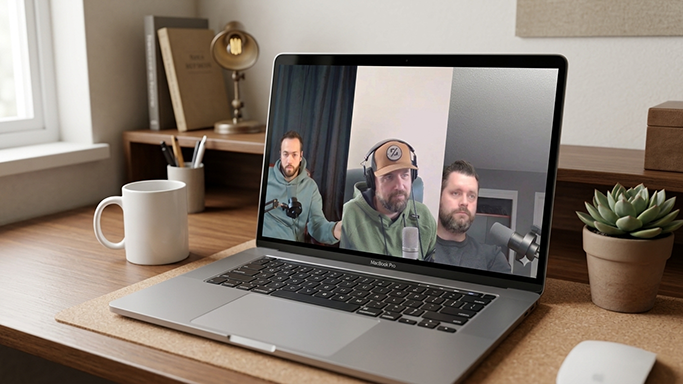
From Behind the Holster, the Concealed Coalition podcast. Hosted by Jody Picou and Matt Wheeler.
A Law With Good Intent and a Training Problem
North Carolina’s House Bill 193 allows teachers in private schools to carry concealed firearms on campus. The intent behind it is straightforward: smaller private schools often can’t afford dedicated security. Teachers carrying firearms are meant to fill that gap.
The bill’s sponsor, Representative Jeff McNeely, introduced it specifically because private schools in his district told him they couldn’t afford to hire security personnel. That’s a real problem, and the bill is a genuine attempt to solve it.
But Jody Picou and Matt Wheeler — both experienced concealed carry instructors and fathers of young children — argue that the way the bill is written creates a different problem: it allows a teacher to carry a firearm in a classroom full of children with as little as eight hours of annual training from an NRA instructor, plus a standard concealed carry permit.
Eight hours isn’t enough. Not for this.
Jody and Matt go deep on all of this — and more — in the full episode. Watch it below.

What House Bill 193 Actually Requires
To carry under HB193, a teacher must hold a valid concealed carry permit — from North Carolina or a reciprocal state — and complete a minimum of eight hours of annual training from an NRA instructor. The NRA Basic Pistol Course, which can be completed online, meets this requirement.
The NRA Basic Pistol Course is a solid introduction to how firearms work. It is not active shooter response training. It is not classroom-specific defensive tactics. It doesn’t address the unique dynamics of a confined space full of children, the psychology of threat response under extreme stress, or the decision-making required to engage a threat in an environment where students are everywhere.
As Matt puts it, training needs to be recent, relevant, and realistic. An eight-hour course — possibly completed online — fails all three criteria when applied to a teacher who may need to respond to an active shooter in month eleven of that training cycle.
Why the Texas Model Works Better
Texas allows teachers to carry in schools, but with significantly higher standards. The state requires approximately 40 hours of training, delivered by a certified school resource instructor — not just any NRA trainer. That training covers active shooter response specifically, with a curriculum designed for the school environment.
In 40 hours, it becomes possible to teach teachers what to actually do: not just how to draw and fire accurately, but how to make high-stakes decisions under extreme stress, how to treat gunshot wounds (stop-the-bleed training), and how to think about their environment differently — as people responsible for the safety of dozens of children who cannot protect themselves.
The difference between a teacher who completed an eight-hour basic pistol course and one who completed 40 hours of school-specific active shooter training is not a matter of degree. It’s a different category of preparedness entirely.
Start Outside the School, Not Inside the Classroom
Both Jody and Matt make a point that tends to get lost in the debate: if an active shooter has made it into a classroom, something has already gone wrong. Prevention starts outside the building.
Jody describes visiting the World War II Museum in New Orleans, where a body scanner at the entrance flags concealed firearms on a screen visible to security. That technology exists. Schools could adopt it. A hardened entrance — where visitors must pass through a controlled corridor before gaining access — is more economical than most people assume and far more effective than relying entirely on armed teachers inside.
The tragic reality of recent school shootings is that many of them originated outside the building and worked their way in. School security planning that focuses exclusively on the interior of a classroom misses the most critical intervention point.
The Everyday Reality of Carrying in a Classroom
There’s a practical problem that doesn’t get enough attention: carrying a firearm comfortably requires practice and habit. A teacher who is new to carrying, sitting behind a desk for seven hours, will eventually be tempted to take the firearm off and put it somewhere else.
That somewhere else, in a classroom, is a disaster waiting to happen.
Jody raises the possibility of a teacher’s desk with a built-in biometric safe — fingerprint access only, with a school-wide alarm that triggers when the safe is opened. It’s not a perfect solution, but it reduces the risk of an unsecured firearm in a classroom while still keeping it accessible to a trained teacher who needs it.
The bottom line: teachers should never carry firearms in a classroom without training that’s specifically designed for that environment. A concealed carry permit and a basic pistol course aren’t enough. The students, the teachers, and the parents all deserve better than the minimum.
If you’re looking for concealed carry training that goes beyond the basics, find a class near you through Concealed Coalition’s nationwide network of instructors.
Frequently Asked Questions
What does North Carolina’s House Bill 193 actually allow?
HB193 allows teachers in private and non-public schools in North Carolina to carry concealed firearms on campus, provided they hold a valid concealed carry permit and complete a minimum of eight hours of annual training from an NRA instructor.
Is eight hours of training enough for a teacher to carry in a classroom?
Jody and Matt’s position is no. Eight hours can cover basic pistol safety and concealed carry fundamentals, but it does not prepare a teacher for active shooter response in a confined space with children. Texas requires 40 hours of school-specific training for the same purpose.
What is the Texas standard for teachers carrying in schools?
Texas requires approximately 40 hours of training delivered by a certified school resource instructor — training specifically designed for active shooter response, not general concealed carry.
Should schools be gun-free zones?
Jody and Matt’s view is no. A gun-free zone removes protection from law-abiding citizens while doing nothing to deter someone who intends to break the law. The question isn’t whether armed protection should exist in schools — it’s what form it should take and what training it should require.
What are some alternatives to teachers carrying firearms in classrooms?
The episode covers several: body scanner technology at building entrances, hardened entry corridors, lockdown activation systems, and tasers as a less-lethal option for classroom use. Prevention that starts outside the building is consistently more effective than relying on armed response inside a classroom.
What’s the difference between concealed carry training and active shooter response training?
These are two completely separate disciplines. Concealed carry training covers firearm safety, state laws, and basic defensive use. Active shooter response training covers threat identification, high-stress decision-making, and classroom-specific tactics. One does not substitute for the other.
Conclusion
House Bill 193 points in the right direction — schools shouldn’t be the softest possible targets, and teachers who want to protect their students should have a legal path to do so. But the training requirement as written doesn’t match the responsibility being assigned.
The standard that matters isn’t what’s legally sufficient. It’s what’s actually enough to protect a classroom full of children if the worst happens.
The full episode is available exclusively to Concealed Coalition YouTube channel members for as little as $3.99/month. Get access here. You can also find concealed carry training near you or pick up range gear and essentials in the store.