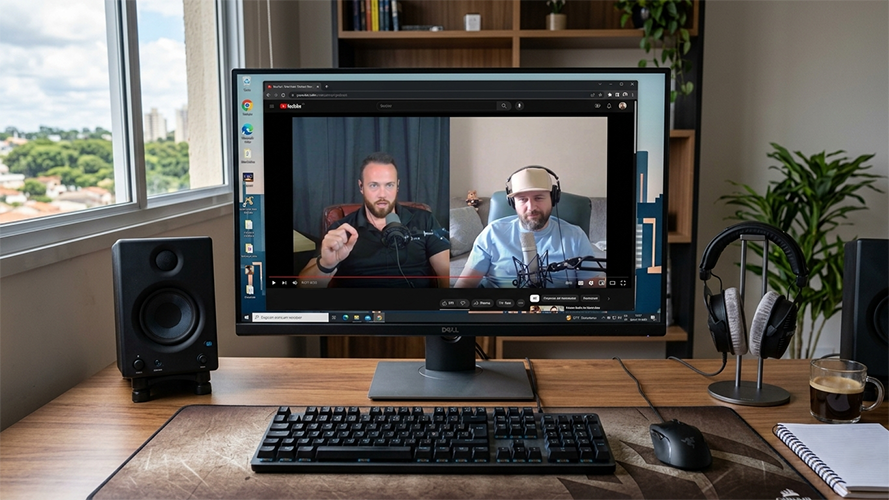
Behind the Holster is a Concealed Coalition podcast hosted by Jody Picou and Matt Wheeler, focused on responsible concealed carry, legal literacy, and personal protection.
This members-exclusive episode of Behind the Holster picks up where Episode 7 (“Is the Legal Justice System Designed for the Good Guy?”) left off — taking a deeper dive into one of the most legally consequential moments a concealed carrier can face: the seconds and minutes after a self-defense incident, when police arrive on scene and the wrong words can shape an entire investigation. It is also the first installment of the “after the fight” series, which extends Concealed Coalition’s training conversations into the legal and procedural terrain that follows a justified use of force. Watch the full conversation as a Concealed Coalition channel member.
Why Do Police Treat Self-Defense Claims as Suspect?
The instinct after a self-defense incident is to explain. To make sure the responding officer immediately understands what happened, who the good guy is, and that the use of force was justified. It is also one of the most legally damaging instincts a concealed carrier can act on.
From the responding officer’s perspective, “I acted in self-defense” is two things at once: a confession that force was used, and a claim that requires investigation before it can be accepted. Every officer who has worked patrol has heard the same line from people who turned out not to be defending themselves at all — they were the aggressor, trying to get out ahead of the story.
Drawing on five years of patrol in South Carolina, Matt Wheeler frames the “five lies a day” reality: bad guys lie to avoid consequences, and good guys lie reflexively about smaller things — a stop sign, a speed limit, a quick text at a red light. By the time the responding officer reaches your call, the default has been set by every interaction earlier that shift. The skepticism isn’t personal. It’s pattern recognition built from the math of the job.
After hearing “I acted in self-defense” repeatedly from people who were actually the aggressor, most officers default to a single posture when they hear it: this person is suspect number one until evidence proves otherwise.
What Should You Say to Police After a Self-Defense Incident?
The recommended approach is straightforward and trained by Concealed Coalition instructors:
Hands up — nothing in them, no immediate threat. “Thank God you’re here. I’m the one who called.” Provide ID. Request an attorney before answering any questions.
Each piece of that sentence is doing work. Hands up eliminates any perception of threat to the responding officer. “I’m the one who called” identifies the concealed carrier as the witness who initiated the response — a critical detail that shifts how the officer is trained to engage. Providing ID is the minimum cooperation required by law in most situations. Asking for an attorney before answering questions invokes the Fifth Amendment and ends the obligation to volunteer anything else.
Saying nothing about specifics doesn’t make a concealed carrier look guilty. It preserves a clean factual record for once representation is present. Defense attorneys give the same advice in every state, in every legal context, for every type of incident. Self-defense is no exception.
What If the Responding Officer Doesn’t Know the Procedure?
One of the more sobering observations Matt makes is that not every responding officer handles a self-defense scene correctly. He recounts cases where inexperienced officers told the eventual convicted shooter to leave the scene — to get in their car and go home — because the officer didn’t realize who they were talking to.
That is why “I’m the one who called” matters as much as the silence that follows it. It identifies the concealed carrier in a way that triggers training every officer is given: even the newest cop on the force knows to take a name and write it down, because their sergeant will ask. From there, the concealed carrier has time to invoke their Fifth Amendment rights and wait for representation.
Once an attorney is requested, the invocation has to hold up against officers who may try to elicit additional statements through casual conversation. Matt notes that some officers will rotate through, asking the same questions in different ways, hoping to get a comment outside the formal Miranda framework. The Fifth Amendment invocation needs to be firm. Polite, but firm.
How Should You Invoke the Fifth Amendment Without Escalating?
There is a difference between invoking your Fifth Amendment rights and antagonizing the officer who is asking the questions. Both ultimately protect a concealed carrier legally, but only one keeps the interaction calm.
Jody and Matt emphasize that respectful, simple language goes a long way. The officer has a job to do. They report to a sergeant. They need basic information — name, who called, who else was on scene — and giving them what is required by law without volunteering anything else makes for a smoother interaction.
The same principle applies to traffic stops where a concealed carrier is informing the officer of a firearm. Matt shares a story from a South Carolina traffic stop where his trainee — who had grown up in New Jersey — drew his firearm and took cover behind the patrol vehicle when the driver leaned out the window of a lifted truck and announced “Hey boys, I got a gun.” In South Carolina, that announcement was casual and even funny. In other parts of the country, it might have ended very differently.
The lesson isn’t to memorize every region’s culture. It’s to default to the simplest, calmest, most respectful version of any communication with police. Hand on the wheel. One hand visible. “I have a permit. I have a firearm. What do you want me to do?” That is the sentence that works in any state, with any officer, regardless of their experience level.
What Are the Three Types of Cops You Might Encounter?
Matt offers a practical framework for understanding the responding officer’s likely state of mind: there are three types of cops on a call.
The new officers, who arrive first because they want to be involved and haven’t yet realized that the first cop on scene gets the report.
The hard chargers, who know the shortcuts and want to be involved but would rather not handle the paperwork.
The retirement-track officers, who run code but slow down a little extra at the green lights — they’ve done it a hundred times and know the new guys are racing them anyway.
The practical takeaway is to default your communication to the newest officer on the force. The new officer is most likely to escalate, most likely to misread a casual remark, and least likely to have seen a self-defense scene before. Train your communication to the lowest denominator and it works for everyone.
How Should Concealed Carriers Approach Police Interactions?
Beyond what to say, Matt offers a mindset shift. Assume every interaction is happening to a cop whose last call was the worst call they have ever responded to. They were lied to, treated badly, and barely got out with their lives.
Starting from that assumption shapes everything. It produces empathy. It produces patience. It produces a tone that signals to the officer — without anyone needing to say it — that this concealed carrier is not a threat, is on the same team, and is going to make the officer’s day a little easier rather than harder.
That kind of de-escalation is invisible. The officer doesn’t necessarily know it is happening. But it changes the trajectory of the interaction, often before any words about self-defense are exchanged.
Why Should Every Concealed Carrier Have Legal Protection?
Toward the end of the episode, Jody makes a direct case for legal protection memberships. The argument is one of cost asymmetry: a concealed carrier could pay legal protection fees for an entire lifetime and still spend less than the cost of a single uncovered defense case.
Concealed Coalition’s legal protection membership includes:
24/7 emergency attorney access — a critical feature in the first hours after a self-defense incident, when the wrong statement to a responding officer can shape the entire investigation.
Email-an-attorney support — for non-emergency questions about laws, scenarios, and edge cases that come up in everyday carry life.
A state-by-state law reference app — particularly relevant for travelers, where reciprocity, prohibited locations, and storage rules vary significantly between states.
The full plan options are available on the Concealed Coalition homepage.
Frequently Asked Questions
Should I tell the police I acted in self-defense?
No. Even when the facts support a self-defense claim, saying “I acted in self-defense” at the scene functions as both an admission of force and a statement that requires investigation. The recommended approach from concealed carry trainers and defense attorneys is to identify yourself as the person who called, stay calm, provide ID, and request an attorney before answering specific questions about what happened.
Is it legal to refuse to answer police questions after a self-defense incident?
Yes. The right against self-incrimination applies in every state. Asking for an attorney before answering questions is not evasion and is not evidence of guilt — it is a constitutional right that exists specifically for situations where what someone says can be used against them later.
What should I say when police arrive on the scene of a self-defense incident?
Concealed Coalition trainers recommend a specific approach: hands up, “thank God you’re here — I’m the one who called,” provide ID, and ask for an attorney before answering questions. This eliminates any perception of immediate threat, identifies you to the officer, and preserves your right to a clean factual record.
What if the officer keeps asking questions after I’ve asked for an attorney?
Stay polite, but stay firm. Some officers will rotate through with the same questions phrased differently, hoping to elicit a comment outside the formal Miranda framework. Repeat the request for an attorney as needed. Anything you say after invoking your rights can still be used against you, so silence is the protection.
Why does the way I communicate with police matter as much as what I say?
Tone, posture, and word choice all shape how an officer reads the interaction. A respectful invocation of the Fifth Amendment keeps the interaction calm. A combative one can escalate the same exchange. The legal protection is the same in either case, but the human dynamics differ significantly — and only one of them keeps you out of additional trouble.
How do police actually decide what happened in a self-defense incident?
Officers secure the scene, gather facts, document evidence, and follow department policy. They don’t determine guilt — that’s the role of solicitors, judges, and juries. Statements made at the scene become part of the evidentiary record reviewed later in that process.
Why are police skeptical of self-defense claims?
Officers hear self-defense claims regularly from people who turn out to be aggressors trying to get out of legal exposure. That pattern shapes the default posture of responding officers — skepticism until evidence proves otherwise. It is not personal; it is the same posture an officer brings to almost every claim made at any scene.
Conclusion
Knowing what to say to police after a self-defense incident is not an optional skill for concealed carriers — it is a core part of responsible carry. The legal terrain after a use-of-force event is shaped by the first words spoken on scene, and those words deserve as much preparation as any drill at the range.
Find concealed carry training near you through Concealed Coalition’s nationwide network of local trainers, or explore the legal protection plans that fit how you carry.
Always verify reciprocity and firearm laws before traveling. Check the Concealed Coalition reciprocity maps or your state’s official .gov website.
Watch the full conversation as a Concealed Coalition channel member for $3.99/month — and stay tuned for the rest of the “after the fight” series.