From Behind the Holster, the Concealed Coalition podcast. Hosted by Jody Picou, with Austin Davis, Concealed Coalition’s National Director of Training.
Choosing a red dot sight for concealed carry comes down to four decisions: whether a dot solves a real problem for you, whether your pistol and holster can take one, which emitter and dot size suit the way you carry, and whether you will maintain it. In this members-only episode of Behind the Holster, Jody Picou and Austin Davis walk through each one. The full conversation is available to Concealed Coalition YouTube channel members.
Show Notes
- 0:00 Introduction
- 2:38 Choosing a red dot for a SIG 365 XL
- 2:52 What problem are you trying to solve?
- 4:04 Batteries and maintenance
- 4:46 Will your gun and holster work with a dot?
- 6:10 Red dots for church safety teams
- 8:34 A first red dot on a budget
- 9:57 Open vs closed emitters
- 11:01 Dot size: 2 MOA vs 6 MOA
- 11:37 Red or green dot?
- 13:16 Target focus: don’t look at the dot
- 14:49 Convergence and where to look
- 16:17 A complete system: mount, ammo and gun
- 17:24 Zero and sight offset
- 17:50 Red dot vs laser
- 19:00 Professional install, torque and witness marks
Show Links
- Find concealed carry training near you
- Shop range gear and essentials
- Join the Concealed Coalition YouTube channel membership
Do you actually need a red dot?
Austin asks the same first question about every gear purchase: what problem are you trying to solve? A red dot is the wrong answer to a poor draw stroke or weak fundamentals. If you mostly expect to get away from trouble, a defensive encounter is likely within about 5 yards, and good mechanics with a small revolver can still do the job. If you may need to go toward trouble, as a church safety team member does, longer shots with a glass wall or bystanders behind the target become realistic, and a dot can help you make them.
Will your gun and holster work with a red dot?
Some pistols ship with a slide designed to carry an optic. Austin’s view is that it is now usually better to buy a pistol already cut for an optic by the manufacturer than to have an existing slide milled. Older systems, such as the original Glock MOS, need an adapter plate. Adding an optic also changes how the gun handles, can make your current holster useless and makes the gun harder to conceal.
Open or closed emitter?
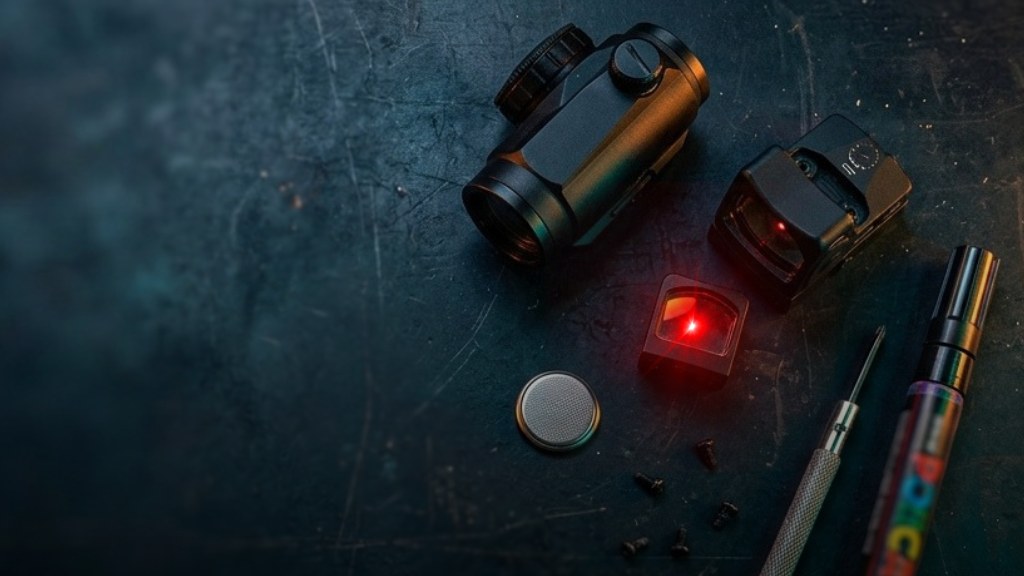
An open emitter has a single lens, which Austin compares to a bucket. It is easy to clear, so he likes it for patrol work. For concealed carry he prefers a closed emitter, because a gun carried against the body collects lint and skin flakes that can cover an open emitter. He started with a Trijicon RMR and has used Holosun optics for about five years, and he considers the Holosun EPS a good value for carry.
What dot size should you choose?
Dot size is measured in minutes of angle. A 2 MOA dot covers about 2 inches at 100 yards and gives a very precise aiming point, which Austin prefers. A 6 MOA dot covers about 6 inches at 100 yards. It may be easier to pick up quickly, but it can make precise shots harder. Red or green is mostly personal: Austin can’t tell the difference, while his son, who is color blind, can only see one of them. Try both before you buy.
How do you maintain a red dot?
Austin changes his battery about every six months, before a training class and on a calendar reminder. Some optics with motion-activated technology last longer, but daily carry can drain a battery faster than the manufacturer’s estimate. Mounting matters just as much. Install the screws with a torque driver to factory specifications, clean them with alcohol, use the thread locker the manufacturer recommends and tighten in the right pattern. Mark the screws with a paint pen so you can see if they start to back out, and replace the mounting screws about once a year. If that sounds like too much, have a professional install the optic.
Where should you look when you shoot with a red dot?
At the target, never at the dot. Austin’s tip is to focus on a small point on the target, the middle of a button rather than the whole person, and let the dot settle there. Looking at the dot moves your point of aim and point of impact, and it pulls your attention away from the threat. He even has some students shoot with masking tape over the front of the optic so they learn to project the dot downrange instead of looking at it.
The reason is convergence. Your eyes can only focus on one plane at a time, so you can focus on the target or on the sight, not both. For a defensive shooter, staying target focused is how you see whether the person is still a threat or whether that object is a phone, not a gun. When you need to move, lead with your eyes and bring the dot to them. Know your zero, too: the optic sits above the bore, and that offset matters more at distance.
Austin also points out that a red dot is not a laser. A laser projects a point onto the target; a red dot is only visible through the optic. Training is what makes the dot useful, and you can find a concealed carry class near you.
Frequently Asked Questions
Is an open or closed emitter better for concealed carry?
For concealed carry, a closed emitter is often the better choice because the lens is protected from lint, dust and skin flakes that build up when a gun is carried against the body. An open emitter is easier to clear and is common on duty guns.
What size red dot is best for a carry pistol?
It depends on the shooter. A 2 MOA dot covers about 2 inches at 100 yards and allows more precise shots. A larger dot, such as 6 MOA, can be faster to pick up but covers more of the target. Many trainers suggest trying both before buying.
How often should you change a red dot battery?
A common practice is about every six months, even if the manufacturer claims longer life, because daily carry can drain batteries faster. A recurring calendar reminder makes it easy to remember.
Can I put a red dot on any pistol?
Not easily. The simplest option is a pistol cut for an optic at the factory. Older mounting systems may need an adapter plate, and adding an optic can change how the gun handles, which holsters fit and how well it conceals.
Should I install a red dot myself?
Only if you have a torque driver and follow the manufacturer’s instructions for cleaning, thread locker and tightening pattern. Otherwise, have a professional install it. Optics take repeated high G-forces and can loosen if they are not mounted correctly.
Should you look at the dot when shooting?
No. Focus on the target and let the dot appear on it. Looking at the dot shifts your point of aim and point of impact and takes your attention off the threat.
Is a red dot the same as a laser?
No. A laser projects a visible point onto the target. A red dot is a reflex sight that is only visible when you look through it.
Conclusion
To choose a red dot sight for concealed carry, start with the problem you need to solve, then pick a pistol and holster that work with an optic, a closed emitter if you carry against the body, and a dot size that matches how precisely you need to shoot. Install it correctly, change the battery about every six months and train to stay focused on the target. A red dot is a system, not an accessory.
This episode is part of the members-only feed. Join the Concealed Coalition YouTube channel for as little as $3.99/month to watch it and every future episode first. You can also find concealed carry training near you or pick up range gear and essentials in the store.
Full Transcript
Read the full transcript
0:00 Introduction
Jody (0:23): What’s up y’all and welcome back to another episode of Behind the Holster. It’s a Concealed Coalition podcast. I am your host, Jody Picou. I’ve got with me again, Mr. Austin Davis, our national director of training. And if you’re watching this video, means that you joined the membership, and I appreciate that. Hope you’re enjoying it. Be sure to leave us comments below. Also, if you have recommendations for shows that you would like to see, topics you’d like for us to talk about, be sure and leave those in the comments, and we’ll make sure that we get together and we do a show just for you. This episode here is a continuation of the red dot or not. And again, I mentioned it in the other episode. I am not the most educated on this topic. And so, I’m enjoying hearing Austin talk about it. I’ve already learned a lot. Spent, I’d say, an hour, hour and a half with him going through some red dot drills as far as drawing and finding that dot, what we’re focusing on.
Jody (1:23): And so we’re going to let Austin go into some detail here, maybe make some recommendations on different red dots because they they can range in price from from pretty cheap to they can get up there and and there’s probably value in it. I don’t know the value, right? I’m I Austin I might fall victim to I want to be the cool kid so let me go buy the expensive one when truthfully I I probably I shouldn’t do that the wife might not be too happy about it but I’d be the cool kid for a little while but if I don’t know how to use it I guess it’s pointless
Austin (2:03): Use this phrase honey I I save this money because I cry I buy once I cry once so I don’t have to buy keep just yeah
Jody (2:11): Yeah I I typically say Austin told me to get it and that usually gets me out of trouble a little bit. You know, you hold a lot of credibility with the family. So,
Austin (2:19): I don’t think she looks at me as is as is as is the guiding light for a better behave and less expensive husband. I’m I’m not convinced that she sees that.
Jody (2:26): But she but she knows you’re educated on it. So, if I say Austin said to buy it, at least she knows. Well, at least it’s a quality product and so I won’t have to go buy another one and then another one and another one. So, let’s get into it.
2:38 Choosing a red dot for a SIG 365 XL
Jody (2:38): Red dot or not, Austin, why don’t you continue on? I I asked you this question actually earlier today, which was, “Hey, man. I’m thinking about getting a red dot on my 365 XL. What would you recommend?”
2:52 What problem are you trying to solve?
Austin (2:52): First question I always ask anybody who tells me, “Oh, I need another gun.” I go, “What problem are you trying to solve?” If you go, “I need another gun because this gun is too small for me.” A lot of times I have really big hands and so when I shoot a really small gun, the 365, I just I overpower the gun. And it’s hard for me to stay out of the controls. And if if I if that was my only gun and I came to you and I said, “Hey, I need another gun.” You go, “Probably not a solve.” And go, “I have XL almost 2x size hands and that gun is just too tiny for me. I keep running the controls in it.” You would go, “Yes, you need to solve that problem.” This is like trying to to walk in a pair of shoes that don’t fit. Great. Solve the problem. If you say, “I have a poor draw stroke. I have a poor mechanics of a draw and I think a red dot will save my my my shooting especially in a duress. I would go wrong wrong wrong answer to wrong problem. So first question is that. Second thing as we said before are you a go-to trouble or get away from trouble person. If you’re a get away from trouble person you’re you’re probably talking 15, you know, 5 yards 15 feet max is is a defensive gun use. At that point you know if you have good mechanics you’re you’re snubby. And I still think there’s a lot of things for a small revolver that people discount.
4:04 Batteries and maintenance
Austin (4:04): So if you’re not the type of person who wants to practice, commit to doing this. There’s some more maintenance to it. Yes, my dot will last a year, some two years, whatever. But every six months, I replace my dot. If I know I’m going to a school, I’ll replace the dot before then. The excuse me, not the dot, the battery. Batteries cheap. I keep tons of them on set. I put it on my calendar so it pops up that hey, it’s time for me to change this out. So, you know, you can do it on your birthday, first of the year, Thanksgiving, whatever. About every six months, change the dot. Some of them you need to change it more than that. You know, if you don’t use the Shake Awake technology on some of them, you may find that daily carry runs the battery down a lot faster than the manufacturer does. You know, first step is figure out what problem you’re trying to solve.
4:46 Will your gun and holster work with a dot?
Austin (4:46): The next thing you need to figure out is, is your firearm going to work well with that thing on top of it? Some already come with excellent mounting systems. It’s a Shadow Systems gun. I think there’s a lot of good things about it. The most important thing is the way they mount it. This whole slide was designed to work with this weight on top of it. A lot of people want to go ahead and have their their existing guns cut for a sight. And you may find when you add a big post office size mailbox on top of it, you may have some very different handling characteristics. You may also find out when you add this to your firearm, you can find out that your holsters may not work with it. You may also find out when you add this, the gun that used to carry really concealable and and just invisible, all of a sudden now I’m adding a whole lot that I’ve got to to try to conceal when I’m in this. So, that’s kind of where I’m at on that is you have to really think about this holistically. Are you willing to get the maintenance? Are you willing to understand that to install this thing, if you don’t have a a torque driver to install these nuts at factory capabilities, this thing gets amazing G-forces. It goes back and forth, that could be a problem. If you’re not patient enough to read the manufacturer’s recommendation to use alcohol to clean them out, which Loctite to use, I’m a big fan of Vibra-Tite more than Loctite. This may not be for you. And if you think that just bolting this on will increase your effectiveness under stress, this may not be for you.
6:10 Red dots for church safety teams
Jody (6:10): Yeah. So, and I love what you said there as far as are you someone who goes towards it or runs away from it,
Austin (6:18): Trouble or get away from or get away from trouble.
Jody (6:18): So, are there specific we did a a church safety training together a while back. Are there certain let’s say church safety teams, other roles like that that people choose to play? Obviously, if you’re going to join a church safety team, you are going to really have to be one of those people who’s saying, “Hey, I’m willing to go towards danger, right?” So, for a church safety team, would you recommend a church safety team? I don’t want to say just having the red dot because I think there’s way more that goes into it, but having it, being trained on it, and utilizing it for something like that.
Austin (6:56): I hope we get to do one of these on just church safety team issues because there’s a lot of One of the things that really concerns me is as we go out and do these church safety teams, I don’t ever find a standard qualification course and I really find that’s a big lack because I just take your word they know how to shoot. I’ve never seen them shoot. If they don’t have somebody like me who’s who’s got 30 years of designing and and training people to the highest standard in law enforcement. So, I have to be able to have this represent the type of shooting you may have to do. If you start looking at some of the churches, your your house of worship, there’s some long shots you may have to make and there are some of those shots that the background is going to be a glass wall or a glass door and possibly people on the other side where you cannot afford to miss. Do you you know do you have the the the skill, the will, and the equipment to make that shot? Do you know where your wobble zone is? And again, I I like an 8-inch circle. If you can keep in this 8-inch circle and you know that it three yards, nine feet, I can hit that every time.
Austin (7:59): Hey, look, if you have a shot that’s longer than that, you’re going to have to run until you get within within three yards of it. If you know that you own 25 yards, an eight-inch circle, 8-inch circle, and you feel confident about that, make it. If you know what it’s like to brace the shot on a wall, a chair, a a a bench, or whatever, and know where your shot is, you go, “Hey, I can make that shot. I got to brace it.” We have to know our limitations. What you will find, though, is if you practice with this, your ability to make that 8-inch circle really extends out. It may send out to what some of your friends can hit with a rifle. It is because it’s a 2-inch specific dot.
8:34 A first red dot on a budget
Jody (8:34): Yeah. So, I’m gonna go purchase one here pretty soon and I’m going to come out to your place and we’re going to go through some we’re gonna or you’re going to come down and we’re going to do some some some training on it. I think for someone like myself who carries daily, trains students all the time, not not on red dots, but just can still carry basic firearm safety. If I’m looking at price point, you know, I got five kids. It’s expensive. Okay. What would you recommend if I was a starter, right? Because that’s truly what I am starting out in red dots. What would you recommend? Are there any specific red dots that you would recommend for someone who’s just kind of getting into it?
Austin (9:22): This answer is going to draw some problems. This is like talking about Ford and Chevy or the Tennessee Titans and the Dallas Cowboys. For me personally, I I’ve been shooting I I started off with a Trijicon RMR. Shot that. I’ve been shooting red dots for years. I shot those for till about five years ago and I’ve gone to the Holosun. I’m a big fan of Holosun. Yes. Is Chinesium. If you got a problem with that, don’t type that on your your iPhone and talk to me about it. Please don’t type that on your Mac and talk to me about it. But I I think dollar for dollar, whatever.
9:57 Open vs closed emitters
Austin (9:53): The big question you have to decide is do you want an open or closed emitter? An open emitter only has one piece of glass. So it’s sort of like a bucket. The problem is is I don’t know if you ever noticed this, but when you do concealed carry after a couple of days, you ever pull your your firearm out and you realize it’s kind of dusty all over. We flake skin cells. And the problem is is when I have this inside my clothing, it really boggles up the screen. So, for patrol, I I really like an open emitter because if I have a problem, I can scoop it off. It just seems better for me. For concealed carry, I really do like it on a closed emitter. I really think the EPS is a really nice price point for it. But, as much time as you spend on what you want to buy this for, you need to really make sure that the mounting systems really well. If you have the old Glock MOS system, you’re going to need an adapter plate for this thing. I think at this point we’re almost at the part of the game to where you need to find a pistol that is already cut from the manufacturer that they already have a mount for what’s going on. And the great thing about a Holosun is just about anybody who makes a mount is going to make one for this.
11:01 Dot size: 2 MOA vs 6 MOA
Austin (10:58): So, I really the next thing you got to figure out is how big a dot do you want? I like a two-inch dot. I like a very precise dot. And the reason I like a precise dot is I’m 63 years of age. I have astigmatism. So, even through glasses, it’s not really a dot. It’s really kind of like a modern art squiggle. And a 2-inch dot has a smaller squiggle for me. You might find a big is easier to pick up, but it may start to obscure if you have a six minute of angle dot, which means at 100 yards it’ll obscure a 6 inch aiming point. That may be easier to pick up, but you might find shooting a precision shot might be more difficult for you.
11:37 Red or green dot?
Jody (11:37): How about this one? I don’t know if this is controversial or not. I hear it and I like to joke with people about it versus what they have. Red dot, red dot or green dot or does it matter?
Austin (11:48): I have both personally can’t tell the difference. I have some people, my son, green is good, red, it just vanishes.
Jody (12:02): Wow.
Austin (12:02): He’s color blind one or the other. I can’t remember which. So if we go to the range with him, he’ll pick one up and go, I can’t see nothing. He’ll pick this up and go, I can see it. So, it depends. Some people it makes a big difference. Some people it doesn’t make any difference. My guess, my suggestion is play with them both and see. I can’t tell the link of difference. I have red all my work guns and rifles and some of my my my work guns have red dots and some have green.
Jody (12:28): I love it. We were running an event I was telling you about a couple weekends ago out in Colorado and as these people would would come up and we would the the firearm would be cleared, right? Make sure it’s clear. And he would say, “Hey, go ahead and pick it up, point it at the target, and make sure you can find the dot.” Well, what I started doing is is as they would come up, I would say, “Make sure you can find the green dot.” And so they would pick it up and and they would do this and they would all look at me, it’s it’s a red dot. I’m like, “I’m just checking to see if you’re sober or not. Good job.” And so, but then I find people who have green dots and I just love saying like, “Dude, you shouldn’t use that green dot, man. You should use your red dot because it’s going to get you killed in the street.” Because personally I don’t know the I don’t you know I’ve never noticed the difference. I’ve shot both and both have performed the exact same way for me. So that’s good to know.
13:16 Target focus: don’t look at the dot
Austin (13:16): There’s a there’s a huge difference in the two. Now let’s talk about training for a second because we can’t get out and and I can’t get hands-on with your people to train them. So I’m going to give you the best tip ever. The real trick about using a dot is we never want to look at the dot. You want to focus on the thing you want to shoot. And if I’m shooting a whole human being, I don’t want to shoot a whole human being. I want to shoot a button on that human being. And me, I’m going to be burning a visual hole in the middle of that button. I’m not trying to shoot the button. I’m trying to shoot the middle of the button. If you’re trying to shoot a a bullseye, don’t shoot the bullseye. Mentally bisect the thing and then find the the the middle of the middle and place it in there. Once you stick the first hole in there, start stacking the other bullets on top of that hole. The reason I want you to take and put a piece of masking tape over this for a long time in your career, and I even have some officers who still have tape on in the streets, is because I need to make sure that you’re not looking at the dot, that the dot is in your brain projected down range. Because if you look at the dot, it moves your point of aim, point of impact, and it causes all kinds of secondary problems.
Austin (14:19): And the minute you start picking up the dot, for me to untrain that and aiming instead of being target focused comes a real problem. And for a defensive shooter, this is important because I need to know, is this person still a lethal threat? Did they drop the gun? Is that gun a a cell phone, not a firearm? It’s a low light situation. I’ve got to discriminate my target so I don’t have a mistake of fact shooting shooting the wrong person the wrong time. So, it’s really important to make sure you you get proper training with this. And
14:49 Convergence and where to look
Jody (14:49): Now on that right there, let me stop real quick on the on the focus. Are you saying focus on the target? Because in your peripherals, we can only focus on one thing, right? So, in your peripherals, are you able to see that dot that’s on what you’re looking at?
Austin (15:05): This is this is something that really frustrates me, and I have this with my officers all the time. I ask them if they don’t qualify, well, I go, “Where were you looking when you’re shooting?” And they look at me like I have a third eye. There’s a thing called convergence. Our eyes are not stacked on top of each other. So, if if you if you take your thumb and put your thumb out like that and look at me. Go ahead and put your thumb like that. Okay. Look at your thumb. And there’s one thumb and there’s two of me. Look at me and superimpose your thumb. There’s one of me and there’s two thumbs. There’s only one place your eyes can cross. I want to be t for defensive purposes. I want to be target focused. If I’m focused on the front sight and I’m not watching what’s going on, I got a problem. And you and I have seen this hundreds of times in Virtual Tactical Academy. We ask them, “Where are we looking when you’re shot? We’re shooting.” And they look at me and they go, “I don’t know.” Because they were looking at the threat. The gun just was like, “I I hope it’s where it’s supposed to be.” So, I want to train myself to be target focused. And I really want to be able to stack that bullet where I’m visually looking. And I want to make sure that I lead with my eyes if I have to move it. I don’t want to take the gun and bring it over here and follow the dot. I want to move and then bring the dot. When the dot’s there, and if everything’s where I need it to be, press the shot.
Jody (16:15): Okay, makes sense.
16:17 A complete system: mount, ammo and gun
Austin (16:17): And when people tell me, “Oh, this gun wiggles too much. I can’t shoot a dot. It moves around too much.” It still moves around that much in your your your primitive metal sights. You just don’t notice them because they’re just so honking huge.
Jody (16:29): Yeah, you notice it a lot more.
Austin (16:31): Shoot something, the more that red dot comes into comes into to your advantage. But you have to pick the right one. Pick the right mount. Pick a firearm that’ll work with it. Make sure that all this runs well with your defensive ammo. A lot of times we defensive ammo is so expensive we don’t think about it, but then you put a flashlight on it, you put this on it, you don’t run it, and the gun won’t run reliably. So, we want to make sure that that this whole systems works with you and that you’re not slowing down trying to adapt to the dot. The dot is making you quicker. And once you get this down, the minute I shoot, the dot will settle right back to where it’s going. I can press it. As long as the the minute the dot lines up and I’m target focus, it’s there. And if I’m ever shooting a string and all a sudden you see one go off, it could have been bad mechanics, but more than likely I was focused on the dot, not the target. And that changes my point of aim, point of impact.
Jody (17:23): That’s interesting.
17:24 Zero and sight offset
Austin (17:24): And figure out where you want to zero it at as well because there’s a line of bore and there’s a line of sight. These are pretty close to each other. There’s an offset here. And this doesn’t really matter so much in close, but as you get out farther, this could be. So you want to know your point of a point of impact shifts with this at distance because we have an offset. Same thing with my my work gun, my work rifle.
17:50 Red dot vs laser
Jody (17:45): That’s interesting stuff. Well, get a system and get training is what I can say because like I said, you you you think it’s a, you know, a red dot. I I think what people confuse a lot of times the red dot and the laser that they operate the same way. And I think they’re they’re there are difference differences in a laser and a red dot.
Austin (18:07): Yeah. You can’t entertain your cat with a red dot. You can with a laser,
Jody (18:10): Right?
Austin (18:11): It’s all about it’s all about pet amusement. Yeah. So, if you got you got a cat, you know, this doesn’t impress my cats at all.
Jody (18:18): I’m Yeah, I’m not a cat guy, but I’ll tell you that our dog we we have a separate laser. It’s not a laser on a gun, but my kids enjoy terrorizing her with that.
Austin (18:31): You know, they have dogs now that can smell cancer on people.
Jody (18:35): I I didn’t know that.
Austin (18:37): Also, I didn’t know this, but I found it recently. Cats can also smell cancer on people, too. They just don’t care if you die from it.
Jody (18:44): That’s That is very That is very true. It sounds just like a cat. Oh, man. Well, that is great information, Austin. Thank you for that. I’m going to go out and get me a red dot here pretty soon whenever I can sneak sneak sneak it in and and blame it on you and
19:00 Professional install, torque and witness marks
Austin (19:00): Have a professional have a professional install it or wait till I get there and we will use it because everything’s got to be torqued on down and then take a paint pen and then you will you’ll notice I got paint marks here, witness marks, so I know if my screws start backing off. So it’s really important to have a professional install this. And remember, the screws that hold the sight in may be considered consumables. I like to change them out every year because they’re taking a beating. Now, if you have a system like this, it’s not a problem, but a lot of the other mounts, I’ve got a smaller set of screws here that are going into a bigger set here on on like a MOS Glock. And so, you may want to change those screws out. So, when you buy the setup, go ahead and get a whole bunch of hardware for it so that you go, I don’t have to go fishing for it. When I change it out, I just throw those away and put some new ones on. You do not want your red dot to hit you in the face. And I have seen these come off in recoil.
Jody (19:51): Yeah. Well, funny story about a red dot. I used one when I took my NRA basic pistol class years ago. And the instructor looked at me and said, “Have you ever shot before?” And I said, “Yes.” And he grabbed my red dot and did this and it shook. And he was like, “Stop.” And he gave I had to I had to finish qualifying with his his gun. That making sure that you’re changing out the screws and making sure those are installed by a professional is very important.
Austin (20:23): Or you install them as a professional install and make sure they’re torqued out right and use the right pattern. So as they yank on the front ones, then go to the back ones and it’s still not in there. So you really it’s not just plug and play. This is Yeah, this is this is a piece of equipment that’s electronic that’s subject to tremendous high repetition G forces. Though
Jody (20:40): That you’re going to be using to potentially save your life or your family’s life. So, it’s that important. All right, Austin, I appreciate that information. Red dot or not. Lots of questions to answer there. So, like we say, at Concealed Coalition, be a guardian always and a warrior when needed.