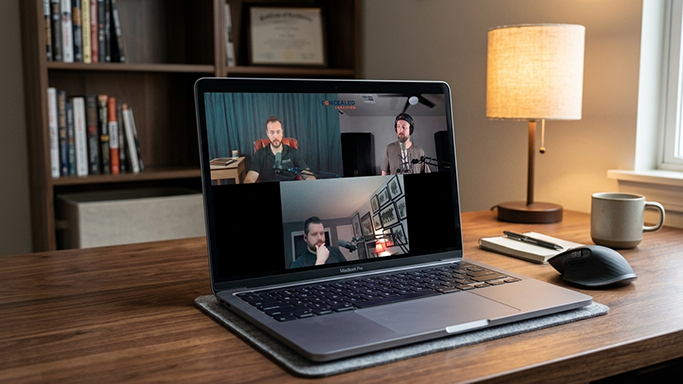
From Behind the Holster, the Concealed Coalition podcast. Hosted by Jody Picou, with Matt Wheeler and Yates Crawford.
A Federal Law With a Definition Problem
If you’ve ever taken a concealed carry class, you’ve heard an instructor say it: if you are a habitual user of a controlled substance, you cannot legally possess a firearm.
That’s the law — 18 USC 922(g)(3). What the law doesn’t do is define what “habitual user” actually means.
No statute has ever established a legal definition. No case law has firmly settled it. And the Supreme Court has been examining the constitutionality of this provision, with a coalition of states pushing to expand how it’s prosecuted — arguing that current enforcement, which requires a person to be under the influence at the time of arrest, is too narrow.
In this episode of Behind the Holster, Jody Picou, Matt Wheeler, and Yates Crawford break down what the statute actually says, why the lack of definition creates serious problems for lawful gun owners, and why Matt Wheeler believes this isn’t really about drug use at all.
The full conversation — and more — in the episode below.
The Definition Problem
The word “habitual” is the core of the issue. Webster defines it as something done consistently or as a habit. Under that definition, a person prescribed medication they take every four to six hours, every day, is technically a habitual user of a controlled substance — even if every pill is legally prescribed by a doctor.
Jody speaks from personal experience here: after a serious car accident, he was prescribed strong narcotics for four years. By the dictionary definition, he was a habitual user. By law, he wasn’t an unlawful user. But the question of whether that distinction would matter in a courtroom — or whether it would depend on how a prosecutor chose to frame it — is precisely the problem the current statute creates.
Matt Wheeler, drawing on his background in law enforcement, explains the enforcement challenge: there is effectively no reliable field test for impairment from prescription drugs. A drug recognition expert — a specialized law enforcement certification that is uncommon even in large agencies — can observe physical indicators and testify in court. But standard officers coming out of the academy aren’t trained to do this, and most agencies don’t have the resources to train them.
With alcohol, every state has a measurable legal threshold. With prescription opioids, stimulants, or narcotics, there’s no equivalent standard. Proving impairment from medication is far more complicated than proving a blood alcohol level.
The Fourth Amendment Concern
Matt’s most significant point in this episode goes beyond the definitional problem. He argues that the push to expand 922(g)(3) isn’t primarily about keeping drugs and guns separated — it’s about creating legal grounds to access gun owners’ medical records and prescription histories.
Every law the lawsuit claims to be solving for already exists. Convicted felons can’t possess firearms — that law is on the books. People adjudicated mentally unfit can’t possess firearms — that’s already law too. Someone actively impaired while carrying a firearm is already violating existing statute.
What isn’t on the books is state-level authority to pull your prescription records simply because you own a gun. Louisiana now requires concealed carry permit applicants to sign a medical release form. Several other states have followed. Matt sees this as a foundation for a future in which carrying a firearm subjects you to medical scrutiny — not because you’ve been accused of a crime, but because you’re exercising a constitutional right.
The Alcohol Double Standard
Yates Crawford raises a question that comes up repeatedly in this conversation: why is alcohol treated so differently?
Alcohol causes approximately 40,900 fatal vehicle collisions per year in the United States. Firearm homicides — most of which are not committed by concealed carry permit holders — account for roughly 17,927 deaths in the same year. Alcohol is legal, regulated by age, and socially normalized to a degree that controlled substances — including legally prescribed medication — are not.
The inconsistency is embedded in the statute itself: alcohol is not classified as a controlled substance under federal law. A concealed carry permit holder who has two glasses of wine at dinner and carries a firearm home isn’t in violation of 922(g)(3). A person prescribed pain medication who carries a firearm — even if they haven’t taken a pill that day — potentially is, depending on how the statute is interpreted.
Where All Three Stand
After working through the legal complexities, all three hosts land in roughly the same place: impairment at the time of the incident should be the standard. Not prior prescription history. Not medical records. Not the presence of a controlled substance in your system from days ago.
If you are materially impaired while in possession of a firearm — measurably impaired, in a way that can be demonstrated — that should be a violation. Outside of that, and outside of individuals with a documented history of violent trafficking or adjudicated mental unfitness, the hosts argue that existing laws are already sufficient.
What 922(g)(3) expansion threatens, in Matt’s view, is the privacy of every gun owner in America — not the safety of the public.
For more on concealed carry laws in your state, find a class near you through Concealed Coalition’s nationwide network of instructors.
Frequently Asked Questions
What is 18 USC 922(g)(3)?
It’s the federal statute that prohibits “habitual users” of controlled substances from possessing firearms. The problem is that “habitual user” has never been legally defined by statute or settled case law.
Does taking legally prescribed medication affect my right to own a firearm?
It’s a genuine legal gray area. The Fifth Circuit has set the precedent that prosecution under 922(g)(3) requires the person to be under the influence at the time of arrest. But a push by several states would expand that definition, potentially making lawful prescription use grounds for prohibition. This is an unsettled area of law.
Can a state access my medical records because I own a gun?
Some states already require permit applicants to sign a medical release form. Louisiana is one. This is the concern Matt Wheeler raises — that expanding 922(g)(3) creates a legal pathway for broader medical scrutiny of gun owners.
How does law enforcement test for drug impairment at a traffic stop?
Standard officers are trained in field sobriety testing for alcohol. Testing for impairment from other substances requires a Drug Recognition Expert (DRE) certification — rare even in large agencies. Without a DRE, proving impairment from prescription drugs in court is extremely difficult.
Why is alcohol treated differently than controlled substances under gun law?
Alcohol is not classified as a controlled substance under federal law. This creates a structural inconsistency: alcohol causes more fatal incidents annually than firearms, but the federal statute restricting firearm possession doesn’t apply to alcohol use.
What’s the hosts’ conclusion on who should be prohibited from carrying?
All three agree that material impairment at the time of carrying should be the standard — not prescription history or prior use. Convicted drug traffickers and those adjudicated mentally unfit are already covered by existing law.
Conclusion
The legal gray area around firearm possession and drug use isn’t going away. As prescription medication becomes more common, as states move toward broader medical scrutiny of permit applicants, and as the Supreme Court continues to hear cases on this statute, the questions raised in this episode will only become more relevant.
The answer isn’t simple. But the direction it should point is clear: impairment at the time of an incident — not a person’s prescription history — should determine their right to carry.
The full episode is available exclusively to Concealed Coalition YouTube channel members for as little as $3.99/month. Get access here. You can also find concealed carry training near you or pick up range gear and essentials in the store.