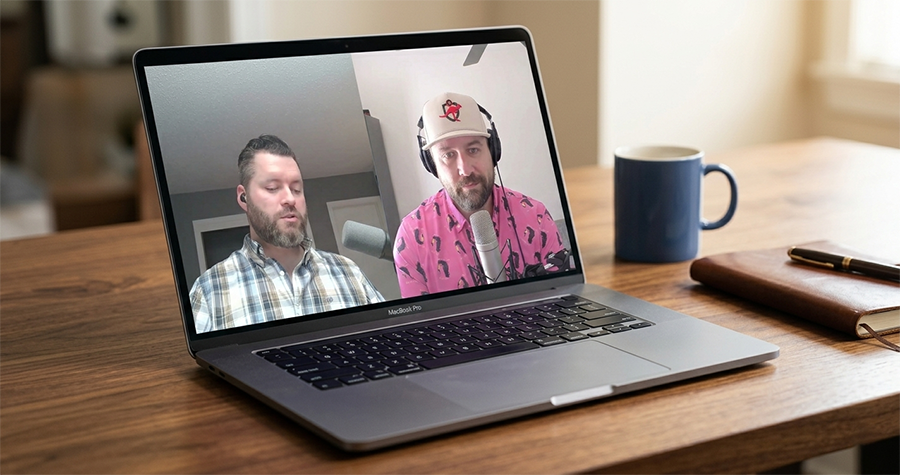
From Behind the Holster, the Concealed Coalition podcast. Hosted by Jody Picou and Yates Crawford.
In episode 6 of Behind the Holster, Jody Picou and Yates Crawford — both Concealed Coalition trainers — tackle one of the most frequently debated questions in concealed carry: should you carry with a round in the chamber, or not? The conversation is unscripted, candid, and more nuanced than most takes on the subject. Watch or listen to the full episode here.
What Is Israeli Carry, and Where Did It Come From?
Israeli carry — also called Condition Three — means carrying a firearm with a loaded magazine but with the chamber empty. The practice traces back to the Israeli Defense Forces in the mid-20th century, when the IDF was fielding a range of handguns with different safety configurations: the Browning Hi-Power, the Walther P38, the CZ 75, and early 1911 variants. Training every soldier on every platform differently was logistically impractical, so commanders adopted a single protocol across all of them — carry empty-chambered and rack the slide on the draw.
The rationale was administrative, not tactical. Keeping everyone on the same protocol reduced training complexity and kept formations operating consistently. An additional factor, Yates notes, was that many handguns of that era were not drop-safe by modern standards, which made an empty chamber a legitimate safety measure for large numbers of armed personnel handling firearms under field conditions.
Does Condition Three Still Make Sense for Modern Concealed Carry?
The original justification for Israeli carry does not map cleanly onto modern civilian concealed carry. Today’s handguns are almost universally drop-safe, and most concealed carriers own a single platform they can learn thoroughly — the multi-platform standardization problem that drove the IDF’s decision simply doesn’t apply.
What has persisted is the habit, particularly among new carriers who feel uncomfortable with the idea of a loaded chamber. Both Jody and Yates acknowledge that discomfort as real and understandable. Their disagreement is about how to respond to it.
What Do Experienced Trainers Actually Recommend for New Shooters?
Yates’s position is clear: the goal for every carrier is chambered carry, and that goal shouldn’t be obscured or indefinitely deferred. A firearm used for personal protection is a tool of last resort, and when the moment arrives to use it, it needs to fire on the draw — not after an additional action that may not be physically or practically possible given time, stress, and hand availability.
Jody takes a more calibrated position specifically for new shooters. A standard concealed carry class, regardless of which state it’s taken in, does not teach students how to draw from a holster, how to select one, or how to build realistic defensive habits. Given that baseline, telling a brand-new gun owner they must carry chambered may create more risk than it eliminates — particularly if they’re nervous, undertrained, and standing next to other people.
His recommendation is not to carry unchambered indefinitely. It’s to pursue training as quickly as possible — real training, beyond the concealed carry qualification — and to adopt chambered carry once that training foundation genuinely exists.
Yates adds a frame both trainers find useful: when a new carrier asks whether they have to carry chambered, they’re often not really asking a question. They’re making a statement — I’m not yet comfortable carrying a loaded firearm. That statement deserves a thoughtful, non-judgmental response. And the most honest response may be that they are not quite ready to carry at all.
What Does Real CCTV Footage Reveal About Defensive Encounters?
The strongest argument for chambered carry doesn’t come from theory — it comes from recorded use-of-force incidents. Yates draws on this footage regularly in training, and what it consistently shows challenges several assumptions that new carriers commonly hold.
Real defensive situations unfold with very little time and very little space. Carriers frequently have one hand occupied — with groceries, a child, a bag, or a door — when a threat materializes. Physiological stress under a genuine threat degrades fine motor skills, making a slide rack under pressure significantly less reliable than the same action performed on a calm range. The idealized scenario — both hands free, a moment to react, a few seconds to chamber — is not what the footage shows.
Yates’s takeaway: if you have not built the rack into your training as an integrated, repetition-built part of your draw stroke — not as a theoretical option, but as a practiced sequence — it is unlikely to function reliably when your body is operating under threat response.
How Do You Train for Whichever Carry Condition You Choose?
Both trainers are consistent on this point: your training must match your carry condition. If you carry chambered, your practice needs to reflect that — drawing from your actual holster, at realistic distances, under time pressure. If you carry unchambered, your draw stroke needs to include the rack, practiced with the same intention and repetition as any other element of the sequence.
Jody’s own story illustrates how to do this honestly. Early in his marriage, his wife was uncomfortable with a loaded firearm in the house with a newborn. Their compromise: Jody would carry without a round in the chamber at home. What made that workable was that he trained specifically for it — loading snap caps, practicing a fingerprint safe access and immediate slide rack in the dark, building that sequence into muscle memory so it would be automatic if he needed it at 2 a.m. He does not recommend that arrangement long-term. But he offers it as the right model for unchambered carry: train for exactly what you intend to do, with the same seriousness you would give any other defensive skill.
What About Carrying Around Kids or in a Family Setting?
The family dimension of this question is one Jody takes seriously. His wife’s concern is illustrative: with young children nearby, the risk of a child accessing a loaded chamber in a purse or holster feels immediate. That’s a legitimate concern. Against it sits the risk of not having time to chamber a round when a threat appears. Neither option eliminates both risks simultaneously.
Jody extends this logic to a Louisiana law that surprises many people: guests are legally required to obtain explicit permission from a homeowner before carrying concealed on private property. Even as a full-time firearms trainer, his default answer to that request is usually no. Not out of distrust — but because saying yes introduces variables he cannot control. What condition is the firearm in? What kind of holster is it in? Is there a chance it gets left somewhere in his house unattended? Saying no carries its own risk — a guest who can’t defend themselves if something happens. There is no option that eliminates risk. Every answer to every carry question involves a tradeoff, and the job of a carrier is to determine which risk they’re more willing to accept given their specific circumstances.
Frequently Asked Questions
What is Israeli carry in concealed carry?
Israeli carry — also called Condition Three — refers to carrying a firearm with a loaded magazine but no round in the chamber. It originated with the Israeli Defense Forces as a training standardization measure across multiple handgun platforms with different safety configurations. The practice has since carried over into civilian concealed carry, particularly among new or hesitant carriers.
Is it safe to carry a gun without one in the chamber?
Neither option is without risk. Carrying chambered risks a negligent discharge if the firearm is not properly holstered and handled. Carrying unchambered risks not having time to chamber a round when a threat presents — particularly given how quickly real defensive incidents develop. The key variable in both cases is the quality and relevance of training.
Should a new shooter carry with one in the chamber?
Jody and Yates agree on the end goal: every concealed carrier should work toward chambered carry. The disagreement is about timeline and mandate. Jody argues that requiring chambered carry from a new shooter who has not yet built the training foundation can introduce more risk than it eliminates. His recommendation is to pursue training as seriously and quickly as possible — beyond the basic concealed carry qualification — and to adopt chambered carry once that training foundation genuinely supports it.
What does Condition Three mean in concealed carry?
Condition Three describes carrying a semi-automatic firearm with a loaded magazine, the chamber empty, and the hammer down. It requires a deliberate action — racking the slide — before the firearm can be fired. This is distinct from Condition One (chambered, safety on), Condition Two (chambered, hammer down on a live round), and Condition Zero (chambered, safety off, ready to fire immediately).
How does physiological stress affect the ability to rack a slide in a defensive situation?
Under genuine threat response, the body’s stress reaction reduces fine motor skills — the precise small movements required to perform actions like racking a slide under pressure. Gross motor movements are preserved and sometimes enhanced, but fine motor actions become less reliable. This is why concealed carry trainers emphasize that any action required in a defensive situation — including racking the slide — must be built into training with enough repetition to survive stress degradation.
What does CCTV footage of real defensive incidents show about carrying chambered?
Footage reviewed in training consistently shows that real defensive encounters develop quickly, in close quarters, and frequently with the defender’s hands occupied. The scenario many carriers imagine — both hands free, a moment to prepare, room to maneuver — does not match what recorded incidents actually look like. This is one of the strongest practical arguments for ensuring that any action required to fire the weapon, such as racking the slide, is as automatic and trained as the draw stroke itself.
What should a concealed carrier do if they’re not yet comfortable carrying chambered?
Both Jody and Yates point to the same answer: get more training. A standard concealed carry license class is not firearms training in a meaningful sense — it doesn’t cover holster selection, drawing under pressure, or realistic defensive scenarios. Carriers who aren’t yet comfortable carrying chambered should seek instruction that builds those skills, and should move toward chambered carry as their training and confidence develop together.
Conclusion
Whether you’re new to concealed carry or have been doing this for years, the full episode is available to watch and listen to now. Channel members got early access — become a member for as little as $3.99/month to be first for every future episode. You can also find concealed carry training near you or browse the Concealed Coalition store for range gear and essentials.