Drinking at Home and Self-Defense: What Castle Doctrine Does Not Cover
From Behind the Holster, a Concealed Coalition podcast, hosted by Jody Picou with Austin Davis, National Director of Training.
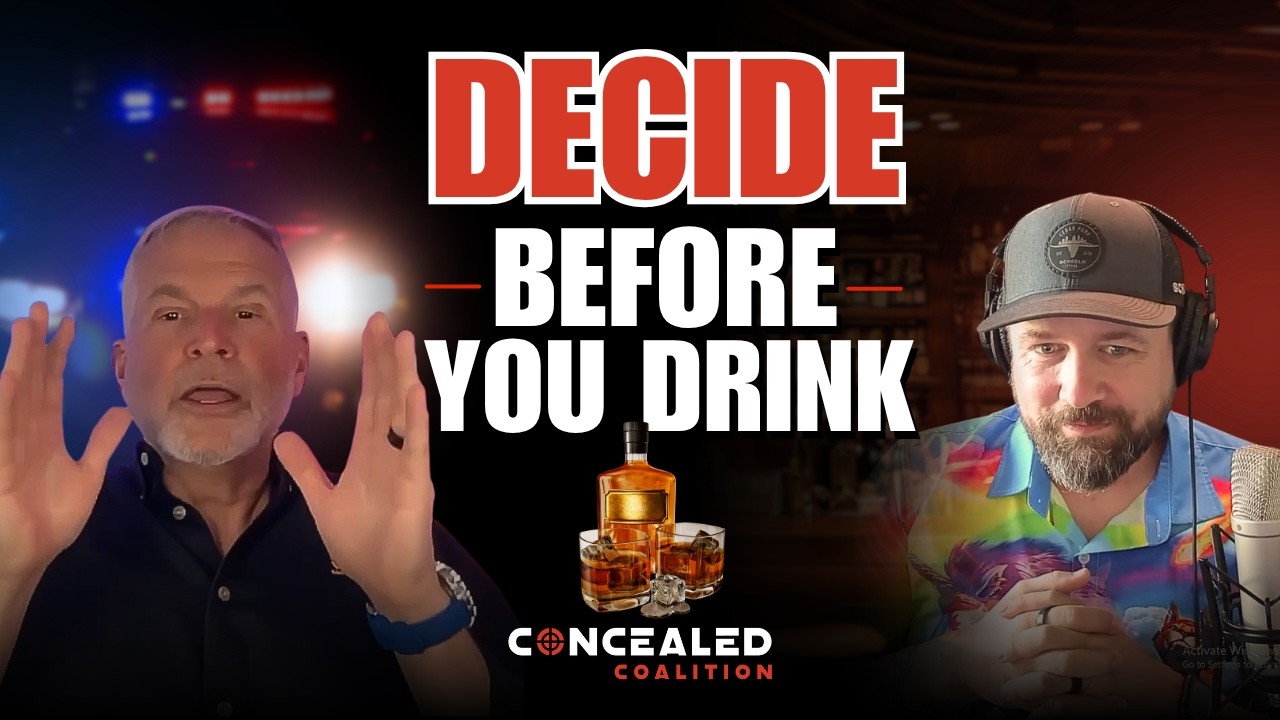
Castle doctrine has a bigger reputation than it has reach. Austin Davis, a commissioned police officer since 1995 and Concealed Coalition’s National Director of Training, points out that it operates in the criminal sense only, which leaves two of the three fights that follow a use of force completely untouched. On this inside edition of Behind the Holster, he and Jody Picou work through what happens when a defensive shooting occurs at home after a few drinks: the five questions every claim has to answer, why Louisiana’s 0.05 carry limit is harder to comply with than it sounds, and why avoidance is worth more than any doctrine.
What Does Castle Doctrine Actually Protect You From?
Less than most gun owners assume. Davis is direct that castle doctrine addresses the criminal question and nothing else. The civil suit remains available to the other party’s family, and the social consequences operate outside any legal process at all.
Jody Picou notes how often the doctrine gets repeated in class as a shortcut, usually in the form of advice about shooting someone outside and dragging them in. His response is that a great deal more goes into it than that, and that protections vary considerably from state to state. Some states where Concealed Coalition teaches have no castle doctrine and impose a duty to retreat instead.
What Five Questions Does Every Self-Defense Claim Have to Answer?
Davis describes self-defense as the strangest area of law, because the person claiming it is not disputing that they did the thing. They are asserting they had a good reason. That reason gets tested against five elements: were you innocent and not the one who started or escalated it, was the threat immediate rather than last week or next week, was your belief that you faced a threat reasonable, was the incident avoidable, and was your response proportional to what you faced.
The standard he stresses is reasonable, not perfect. He also argues there is rarely such a thing as a clean defensive gun use, because at least one of those five elements almost always leaves enough room for someone to challenge it. His illustration of proportionality is a threat of a slap answered with an emptied magazine, which castle doctrine does not rescue.
The investigation reaches further than most people expect. Officers separate a scene into victim, suspect, witnesses and bystanders, then gather facts, and those facts include how many shots were fired, whether each was necessary, and whether neighbors heard a pause in the sequence.
Can You Legally Carry After Drinking in Louisiana?
Louisiana permits carrying with a blood alcohol concentration up to 0.05. Davis notes that every other state he has taught in requires zero alcohol to carry outside the home. Jody Picou raises the practical problem immediately: nobody carries a breathalyzer, so a permit holder in a state with a numeric limit has no way to know where they stand.
Davis adds a second problem even for someone who could measure it. A single reading is like glancing at a speedometer. The number tells you where you are, not which direction you are moving, so a reading of 0.04 says nothing about what the next ten minutes hold. He also observes that sorting a dynamic encounter demands real mental effort, and those judgments are hard enough sober.
Before traveling, confirm the rules for your destination using the Concealed Coalition reciprocity maps and your destination state’s official .gov resources.
What Are the Three Uses of a Defensive Firearm?
Davis reduces it to three: to save human life rather than property, to avoid harming innocent life, and as a tool of last resort. The second is where he goes further than most instructors. A bad defensive gun use that sends someone to prison also harms their own family, who cannot make the house payment or the car payment without them. Those people are innocent parties too, which means responsibility extends past the moment of the incident.
Last resort is also a practical problem rather than a philosophical one. Davis points out that if a firearm is the only tool you carry, it cannot function as a last resort, because it is your only resort. Roughly 60 to 65 percent of cases involve more than one attacker, which is why he carries layered options and estimates that a pocket pepper spray and a good flashlight resolve about 85 percent of problems without a firearm entering the picture. Carry and storage gear is available in the Concealed Coalition Store.
Why Is Answering the Door Different From Opening It?
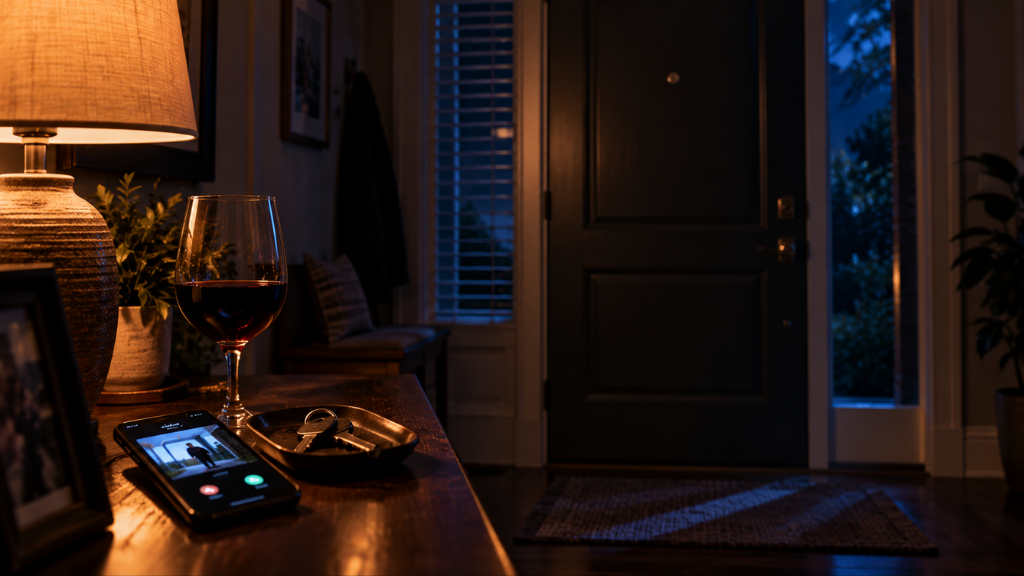
This is the distinction both hosts return to, and it matters more once alcohol is involved. Answering a door means finding out who is there. Opening it means moving toward the one place the danger is most likely to be. Cameras, a peephole and a blind all answer without opening.
Davis adds a perspective from the other side of the door. A late knock is often law enforcement, and every police interaction in the United States already involves at least one firearm. Answering with a gun in hand introduces a second one into an encounter that did not need it. Jody Picou notes that alcohol tends to make people slightly braver and slightly less careful at exactly the moment that combination is least useful.
What Happens When There Are No Charges at All?
Davis tells the story of a father whose daughter had broken up with a boyfriend. The boyfriend arrived near midnight, parked half on the lawn, and started shouting. The father went out armed, the boyfriend turned out to be armed as well, and the father shot him. No criminal charge followed. No civil judgment followed either.
The consequences arrived anyway. The boyfriend’s friends kept driving past the house. The children had to change schools. The family could not sell the property. His employer terminated him in an industry where everyone knows everyone, and two years later he had lost nearly everything. Even his house of worship turned away. Picou describes a nearly identical outcome involving a neighbor dispute where the shooting was criminally justified and the family still had to move.
Austin Davis argues that avoidance removes all of it at once. Stand your ground describes what you may do, not what you should. If you want to work through these decisions with an instructor, Concealed Coalition runs in-person and online training nationwide.
Frequently Asked Questions
Does castle doctrine protect you if you have been drinking?
Castle doctrine addresses criminal liability, and Austin Davis is clear that it operates in the criminal sense only. It does not prevent a civil suit brought by the other party’s family, and it has no bearing on employment, housing or community consequences. Alcohol in your system does not void castle doctrine, but it becomes part of the documented record and can affect a civil case decided on a lower standard of proof than a criminal one.
What is the difference between stand your ground and a duty to retreat?
A stand your ground state does not require you to withdraw before using force if you are lawfully present. A duty to retreat state requires you to withdraw where safely possible. Austin Davis and Jody Picou both stress that stand your ground describes what the law permits, not what is advisable, and note that some states where Concealed Coalition teaches have no castle doctrine and impose a duty to retreat instead.
Can you carry a firearm with alcohol in your system in Louisiana?
Louisiana permits carrying with a blood alcohol concentration up to 0.05. Austin Davis notes that every other state he has taught in requires zero alcohol to carry outside the home. The practical difficulty is measurement, since almost nobody carries a breathalyzer, and Davis adds that a single reading indicates only your current level and not whether it is still rising.
How many self-defense incidents involve more than one attacker?
Austin Davis puts it at roughly 60 to 65 percent of cases. That figure is the basis for his argument against relying on a single capability, whether that is a firearm or a martial art. He carries a firearm, pepper spray, a knife and a flashlight, and estimates that pepper spray and a flashlight alone resolve about 85 percent of problems.
What should you carry besides a firearm?
Austin Davis carries pepper spray, a pocket knife and a flashlight alongside a firearm, and keeps a home defense pepper spray unit by his front door. He has been a certified police pepper spray instructor since 1993 and is sprayed every three to five years as part of recertification. His preferred brands are POM and SABRE. His reasoning is that a firearm cannot be a tool of last resort if it is the only tool you have.
Should you get a concealed carry permit in a constitutional carry state?
Austin Davis gives three reasons to get one anyway. First, the process exposes you to the actual law, which often differs from what people assume it is. Second, a permit is the closest thing you can hand an officer that documents a background check and a due diligence process. Third, experienced defense attorneys report that juries respond well to a permit holder who took an extra step beyond what the law required.
Conclusion: What Does Castle Doctrine Not Cover?
Castle doctrine covers the criminal question. It does not cover the civil suit, and it does not cover losing a job, a house, a school or a community. Every self-defense claim still has to answer whether you were innocent, whether the threat was immediate, whether your belief was reasonable, whether the incident was avoidable and whether your response was proportional. Alcohol does not erase those questions. It makes them harder to answer well and adds a documented fact that a civil attorney can build on.
The conclusion Jody Picou and Austin Davis reach is that avoidance outperforms every doctrine available. Not opening the door, holding a good lock, keeping options short of lethal force and swallowing an ego in public are all cheaper than being right in court. A defensive firearm exists to make you safer. Deciding in advance where it goes, who you drink around and how you get home is what keeps it doing that job.
The full inside edition of this conversation lives inside the Concealed Coalition membership. Join for as little as $3.99 per month to watch it.