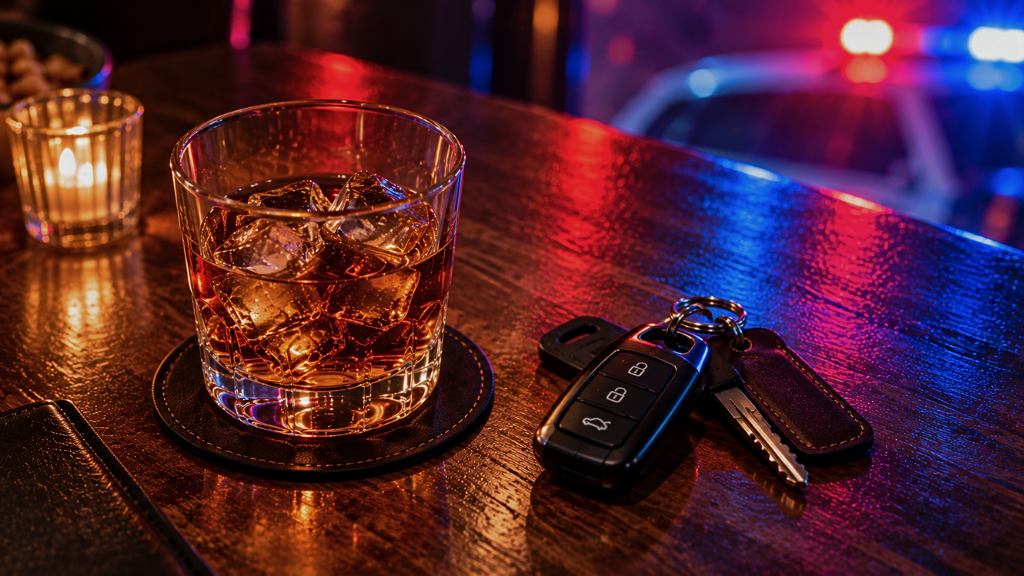
Alcohol and Firearms: What Happens If You Use Your Gun After Drinking
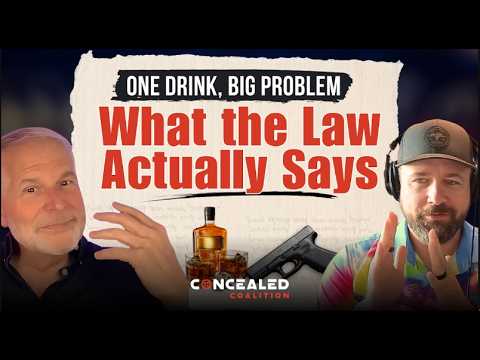
From Behind the Holster, a Concealed Coalition podcast, hosted by Jody Picou with Austin Davis, National Director of Training.
Alcohol and firearms sits near the top of the list of questions asked in concealed carry classes, and the answer is less settled than most gun owners assume. Louisiana permits carrying with a blood alcohol concentration up to 0.05. Every other state Austin Davis has taught in requires zero alcohol to carry outside the home. Texas requires establishments drawing more than 51 percent of their revenue from alcohol sales to post signage, while other states apply comparable thresholds and post nothing at all. On this episode of Behind the Holster, Jody Picou and Austin Davis work through what the law allows, what a responding officer records, and what actually happens after a defensive gun use when alcohol is in the picture.
What Does State Law Say About Carrying With Alcohol in Your System?
There is no national rule. Some states prohibit any measurable alcohol while carrying. Louisiana sets a ceiling of 0.05, which is lower than the driving limit in most of the country. The practical problem Jody Picou raises is that nobody carries a breathalyzer, so a permit holder in a state with a numeric limit has no reliable way to know which side of it they are on.
Carrying inside an establishment that serves alcohol is a separate question from having alcohol in your system. Texas addresses it with a posted sign at any business drawing more than 51 percent of its revenue from alcohol. Other states set similar revenue thresholds without requiring signage, which leaves the visitor guessing at a percentage they have no way to look up from the parking lot. Before traveling, check the Concealed Coalition reciprocity maps and your destination state’s official .gov resources.
What Does a Responding Officer Actually Do?
Austin Davis trains police officers, and his description of the first few minutes is procedural rather than dramatic. An officer arriving at a use of force sorts the scene into four categories immediately: victim, suspect, witnesses and bystanders, keeping them separated while facts are gathered.
Alcohol enters that record as an observation. Glassy eyes and the smell of an alcoholic beverage go into the report. Davis notes that officers routinely pull credit card charges and video footage from the bar, which means a person who says they had one drink when the receipt shows two has created a credibility problem before anyone reaches the question of whether the shooting was justified. The officer at the scene is not deciding the case. They are assembling the record the case will be decided on later.
How Does Alcohol Affect the Skills a Defensive Encounter Requires?
Davis argues that three things decide a defensive encounter: skilled decision making, solid procedural skills and emotional control. Alcohol works against all three. It suppresses prefrontal cortex function, which is the part of the brain governing judgment and impulse control.
The more useful point is the second-order one. Alcohol also produces what Davis calls an internal deception, meaning the impairment conceals itself. A person is not only less capable of assessing a situation, they are also less capable of recognizing that they are less capable. Emotional control is the piece he weights most heavily, because a comment that a sober person absorbs and walks away from can escalate when a few drinks have lowered the threshold.
Why Doesn’t a Criminal Acquittal End Your Exposure?
Davis frames any use of force as three separate fights: the criminal prosecution, the civil suit and the social consequences. Clearing the first does not resolve the other two.
The civil standard is the one gun owners tend to underestimate. A criminal case requires proof beyond a reasonable doubt. A civil case runs on preponderance of the evidence, a materially lower bar, and alcohol in the record can influence which side of it a jury lands on. The third fight has no courtroom at all. Davis describes people who were never charged criminally or civilly and still lost a job, had to move, pulled children out of a school, and found their own community turning away. His summary is that the confrontation itself may be the easiest part of the process.
Where Should Your Firearm Go When You Cannot Carry Inside?
Anyone who carries daily will eventually reach a place where carrying inside is not legal, which makes the vehicle the default answer. Both hosts are direct that a glove box, a center console and the space under a seat are not secure storage.
The fix they describe costs about thirty dollars: a small metal lockbox with a steel cable anchored to the vehicle frame. The reasoning is about the threat model rather than the hardware. Vehicle break-ins are snatch and grab events. A thief working fast is not carrying bolt cutters and will not spend half an hour fighting a cable, so a modest lockbox defeats the specific attack that actually happens. Concealed Coalition stocks storage and carry gear in the Concealed Coalition Store, and this episode is sponsored by Kangaroo Carry.
What Should You Decide Before You Drink?
Neither host argues against drinking. Both argue against improvising. The decisions worth making in advance are where the firearm will be stored, who you are drinking around, and how you are getting home. Davis is blunt that the people who are most entertaining to drink with are often entertaining for the same reason they have poor impulse control, and that introducing a firearm into that mix creates second and third order problems most people never consider.
The underlying logic is that a defensive firearm exists to solve a problem, so carrying it into a situation where it becomes the problem inverts the point of owning it. If you want to work through these scenarios with an instructor rather than on your own, Concealed Coalition runs in-person and online training nationwide.
Frequently Asked Questions
Can you legally carry a firearm after drinking?
It depends entirely on the state. Louisiana allows carrying with a blood alcohol concentration up to 0.05. Every other state Austin Davis has taught in requires zero alcohol in your system to carry outside the home. Because the rule is set at state level and the numeric limits are low, a permit holder needs to confirm their own state’s standard rather than assuming it resembles the driving limit.
Does one drink affect a self-defense claim?
It can, because it becomes part of the record. Austin Davis explains that a responding officer documents observable signs of alcohol, including glassy eyes and the smell of an alcoholic beverage, regardless of how much was actually consumed. That documentation then follows the case into any criminal or civil proceeding. One drink does not automatically make a justified defensive gun use unjustified, but it does introduce a factor that a prosecutor or a civil attorney can build on.
What does a police officer look for if alcohol is involved in a shooting?
Officers first separate the scene into victim, suspect, witnesses and bystanders, then gather facts. Where alcohol is suspected, that includes observable physical signs and outside verification such as credit card charges and video footage from the establishment. Austin Davis emphasizes that discrepancies matter as much as the alcohol itself, because a person who understates how much they drank has damaged their own credibility on every other point.
Can you be sued even if you are not criminally charged?
Yes. A criminal case and a civil case are separate proceedings with different standards of proof. Criminal conviction requires proof beyond a reasonable doubt, while a civil judgment requires only a preponderance of the evidence. Austin Davis notes that alcohol in the record can affect that civil calculation, and that a person cleared criminally can still face a substantial civil judgment brought by the other party’s family.
Is it legal to carry a firearm into a bar?
In many states it is not, and the rules vary in how they are communicated. Texas requires businesses drawing more than 51 percent of their revenue from alcohol sales to post signage identifying themselves. Other states apply similar revenue thresholds without mandating any sign, so a customer has no way to determine the establishment’s revenue mix on sight. Austin Davis points out that carrying into a prohibited location creates a violation independent of whether a later use of force was justified.
Where should you store a firearm in your vehicle?
In a locked container secured to the vehicle, not in a glove box, center console or under a seat. Both hosts recommend a small metal lockbox with a steel cable anchored to the frame, available for roughly thirty dollars. The reasoning is that most vehicle gun thefts are quick snatch and grab break-ins by thieves who are not equipped to cut a cable or willing to spend the time, so even inexpensive anchored storage defeats the realistic threat.
Conclusion: Can You Carry a Firearm After Drinking?
Legally, that depends on your state, and in most of the country the answer is no if you have any alcohol in your system. Louisiana’s 0.05 ceiling is the exception rather than the rule, and even where a numeric limit exists, no practical way to measure it in the moment. Practically, the legal question is only the first of several. Alcohol degrades decision making, procedural skill and emotional control, it becomes a documented fact in any investigation, and it can influence a civil judgment decided on a lower standard of proof than a criminal one.
The answer Jody Picou and Austin Davis land on is not abstinence. It is that the decisions determining how a night ends should be made before it starts: where the firearm is stored, who you are around, and how you get home. A defensive firearm is meant to reduce risk. Carrying one into a situation where it adds risk defeats the purpose of owning it.