From Behind the Holster, a Concealed Coalition podcast, hosted by Jody Picou with Austin Davis, National Director of Training.
Castle doctrine has a bigger reputation than it has reach. Austin Davis, a commissioned police officer since 1995 and Concealed Coalition’s National Director of Training, points out that it operates in the criminal sense only, which leaves two of the three fights that follow a use of force completely untouched. On this inside edition of Behind the Holster, he and Jody Picou work through what happens when a defensive shooting occurs at home after a few drinks: the five questions every claim has to answer, why Louisiana’s 0.05 carry limit is harder to comply with than it sounds, and why avoidance is worth more than any doctrine.
Show Notes
- 0:00 Introduction
- 1:13 Why Are You Drinking? Purpose Over Quantity
- 2:33 Drinking and Carrying at a Bachelor Party
- 3:27 Castle Doctrine and the Shoot Them Outside Myth
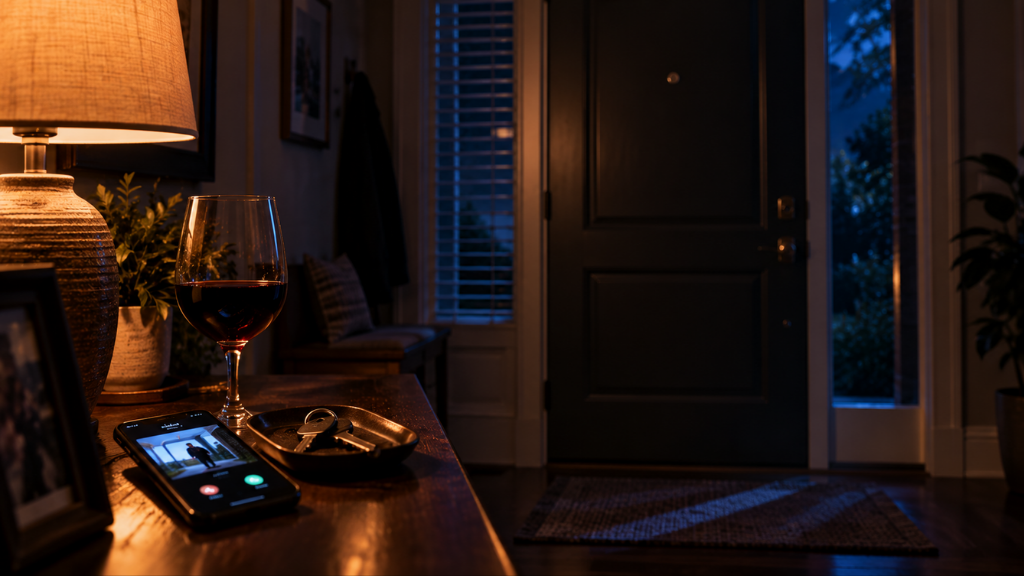
- 4:17 A Defensive Shooting at Home After a Few Drinks
- 5:36 Who You Drink Around and Emotional Control
- 8:36 The Five Questions Behind Every Self-Defense Claim
- 10:29 Avoidance and Stand Your Ground
- 11:20 Answering the Door Is Not Opening the Door
- 12:15 No Charges and Still Losing Everything
- 14:37 Carrying More Than One Tool
- 17:20 The Three Uses of a Defensive Firearm
- 22:47 Louisiana’s 0.05 Rule and Why Breathalyzers Mislead
- 24:02 Think Before You Drink
- 26:51 Three Reasons to Get a Permit Anyway
Show Links
- Find concealed carry training near you
- Shop range gear and essentials
- Join the Concealed Coalition YouTube channel membership
What Does Castle Doctrine Actually Protect You From?
Less than most gun owners assume. Davis is direct that castle doctrine addresses the criminal question and nothing else. The civil suit remains available to the other party’s family, and the social consequences operate outside any legal process at all.
Jody Picou notes how often the doctrine gets repeated in class as a shortcut, usually in the form of advice about shooting someone outside and dragging them in. His response is that a great deal more goes into it than that, and that protections vary considerably from state to state. Some states where Concealed Coalition teaches have no castle doctrine and impose a duty to retreat instead.
What Five Questions Does Every Self-Defense Claim Have to Answer?
Davis describes self-defense as the strangest area of law, because the person claiming it is not disputing that they did the thing. They are asserting they had a good reason. That reason gets tested against five elements: were you innocent and not the one who started or escalated it, was the threat immediate rather than last week or next week, was your belief that you faced a threat reasonable, was the incident avoidable, and was your response proportional to what you faced.
The standard he stresses is reasonable, not perfect. He also argues there is rarely such a thing as a clean defensive gun use, because at least one of those five elements almost always leaves enough room for someone to challenge it. His illustration of proportionality is a threat of a slap answered with an emptied magazine, which castle doctrine does not rescue.
The investigation reaches further than most people expect. Officers separate a scene into victim, suspect, witnesses and bystanders, then gather facts, and those facts include how many shots were fired, whether each was necessary, and whether neighbors heard a pause in the sequence.
Can You Legally Carry After Drinking in Louisiana?
Louisiana permits carrying with a blood alcohol concentration up to 0.05. Davis notes that every other state he has taught in requires zero alcohol to carry outside the home. Jody Picou raises the practical problem immediately: nobody carries a breathalyzer, so a permit holder in a state with a numeric limit has no way to know where they stand.
Davis adds a second problem even for someone who could measure it. A single reading is like glancing at a speedometer. The number tells you where you are, not which direction you are moving, so a reading of 0.04 says nothing about what the next ten minutes hold. He also observes that sorting a dynamic encounter demands real mental effort, and those judgments are hard enough sober.
Before traveling, confirm the rules for your destination using the Concealed Coalition reciprocity maps and your destination state’s official .gov resources.
What Are the Three Uses of a Defensive Firearm?
Davis reduces it to three: to save human life rather than property, to avoid harming innocent life, and as a tool of last resort. The second is where he goes further than most instructors. A bad defensive gun use that sends someone to prison also harms their own family, who cannot make the house payment or the car payment without them. Those people are innocent parties too, which means responsibility extends past the moment of the incident.
Last resort is also a practical problem rather than a philosophical one. Davis points out that if a firearm is the only tool you carry, it cannot function as a last resort, because it is your only resort. Roughly 60 to 65 percent of cases involve more than one attacker, which is why he carries layered options and estimates that a pocket pepper spray and a good flashlight resolve about 85 percent of problems without a firearm entering the picture. Carry and storage gear is available in the Concealed Coalition Store.
Why Is Answering the Door Different From Opening It?
This is the distinction both hosts return to, and it matters more once alcohol is involved. Answering a door means finding out who is there. Opening it means moving toward the one place the danger is most likely to be. Cameras, a peephole and a blind all answer without opening.
Davis adds a perspective from the other side of the door. A late knock is often law enforcement, and every police interaction in the United States already involves at least one firearm. Answering with a gun in hand introduces a second one into an encounter that did not need it. Jody Picou notes that alcohol tends to make people slightly braver and slightly less careful at exactly the moment that combination is least useful.
What Happens When There Are No Charges at All?
Davis tells the story of a father whose daughter had broken up with a boyfriend. The boyfriend arrived near midnight, parked half on the lawn, and started shouting. The father went out armed, the boyfriend turned out to be armed as well, and the father shot him. No criminal charge followed. No civil judgment followed either.
The consequences arrived anyway. The boyfriend’s friends kept driving past the house. The children had to change schools. The family could not sell the property. His employer terminated him in an industry where everyone knows everyone, and two years later he had lost nearly everything. Even his house of worship turned away. Picou describes a nearly identical outcome involving a neighbor dispute where the shooting was criminally justified and the family still had to move.
Austin Davis argues that avoidance removes all of it at once. Stand your ground describes what you may do, not what you should. If you want to work through these decisions with an instructor, Concealed Coalition runs in-person and online training nationwide.
Frequently Asked Questions
Does castle doctrine protect you if you have been drinking?
Castle doctrine addresses criminal liability, and Austin Davis is clear that it operates in the criminal sense only. It does not prevent a civil suit brought by the other party’s family, and it has no bearing on employment, housing or community consequences. Alcohol in your system does not void castle doctrine, but it becomes part of the documented record and can affect a civil case decided on a lower standard of proof than a criminal one.
What is the difference between stand your ground and a duty to retreat?
A stand your ground state does not require you to withdraw before using force if you are lawfully present. A duty to retreat state requires you to withdraw where safely possible. Austin Davis and Jody Picou both stress that stand your ground describes what the law permits, not what is advisable, and note that some states where Concealed Coalition teaches have no castle doctrine and impose a duty to retreat instead.
Can you carry a firearm with alcohol in your system in Louisiana?
Louisiana permits carrying with a blood alcohol concentration up to 0.05. Austin Davis notes that every other state he has taught in requires zero alcohol to carry outside the home. The practical difficulty is measurement, since almost nobody carries a breathalyzer, and Davis adds that a single reading indicates only your current level and not whether it is still rising.
How many self-defense incidents involve more than one attacker?
Austin Davis puts it at roughly 60 to 65 percent of cases. That figure is the basis for his argument against relying on a single capability, whether that is a firearm or a martial art. He carries a firearm, pepper spray, a knife and a flashlight, and estimates that pepper spray and a flashlight alone resolve about 85 percent of problems.
What should you carry besides a firearm?
Austin Davis carries pepper spray, a pocket knife and a flashlight alongside a firearm, and keeps a home defense pepper spray unit by his front door. He has been a certified police pepper spray instructor since 1993 and is sprayed every three to five years as part of recertification. His preferred brands are POM and SABRE. His reasoning is that a firearm cannot be a tool of last resort if it is the only tool you have.
Should you get a concealed carry permit in a constitutional carry state?
Austin Davis gives three reasons to get one anyway. First, the process exposes you to the actual law, which often differs from what people assume it is. Second, a permit is the closest thing you can hand an officer that documents a background check and a due diligence process. Third, experienced defense attorneys report that juries respond well to a permit holder who took an extra step beyond what the law required.
Conclusion: What Does Castle Doctrine Not Cover?
Castle doctrine covers the criminal question. It does not cover the civil suit, and it does not cover losing a job, a house, a school or a community. Every self-defense claim still has to answer whether you were innocent, whether the threat was immediate, whether your belief was reasonable, whether the incident was avoidable and whether your response was proportional. Alcohol does not erase those questions. It makes them harder to answer well and adds a documented fact that a civil attorney can build on.
The conclusion Jody Picou and Austin Davis reach is that avoidance outperforms every doctrine available. Not opening the door, holding a good lock, keeping options short of lethal force and swallowing an ego in public are all cheaper than being right in court. A defensive firearm exists to make you safer. Deciding in advance where it goes, who you drink around and how you get home is what keeps it doing that job.
The full inside edition of this conversation lives inside the Concealed Coalition membership. Join for as little as $3.99 per month to watch it.
Full Transcript
Read the full transcript
0:00 Introduction
Jody (0:23): What’s up y’all and welcome to Behind the Holster, the inside edition. on a part of our YouTube membership and we are going to talk about alcohol and firearms. We’re going to go into some detail with this as to I don’t want to spoil it, but lots of things that have to do with alcohol and firearms. Whether that be carrying, defensive use of a firearm, or may be defensive use of something else. I know some of us probably have felt like John Wick or 10 foot tall when we’ve had a few drinks and some of us have come to find out in some ways that we weren’t quite that tall or John Wick in that instance.
Jody (1:08): So, let’s get into or Mike Tyson.
1:13 Why Are You Drinking? Purpose Over Quantity
Jody (1:13): Yeah, let’s get into some of the details of that. We got Austin with us again. And Austin, I know a lot of a lot of some of the things we’re going to talk about have to do with where you are when you’re maybe having some alcoholic beverages. and potentially in the area of a firearm or carrying a firearm. But I think some of the more important part is why are you having that alcoholic beverage?
Jody (1:45): I think you have some really good insight on that.
Austin (1:50): Well, you know, first off, we’re not against drinking. We are definitely I think this is an easy one. We’re not against having a good time with an intoxicant. Not that you and I haven’t been in armed a few times with it, but here’s the deal. You know, when you think about whether or not you want to have a gun on you, there’s some things you might want to think about. You know, what is the purpose of your drinking? If it’s just sort of a controlled dose with friends and food, that’s one thing. If it’s you and I and the big game or hitting casinos or, you know, I’m going to somebody’s, you know, bachelor party or whatever, that’s a very different drinking experience.
Austin (2:22): Now they both downstream could end up with some problems but I think that the level of problems depend on what is your purpose for in this intoxication.
2:33 Drinking and Carrying at a Bachelor Party
Jody (2:33): Yeah. And I think that plays into also you know I mean you mentioned it before but you mentioned the bachelor party part of it and so drinking and carrying at a bachelor party probably I don’t know that that’s going to be a good idea. what if you have a designated driver, you need a designated shooter as well. And so if you want to be that person who’s not having alcoholic beverages that night, maybe carry. But I’ve heard a lot of stories and been on a few bachelor parties that carrying a firearm probably was not a great idea.
Austin (3:10): Having said that, I think you were at a bachelor party where you all went to a gun range.
Jody (3:14): Yes, we did. And so yeah, and there was no no drinking involved with that. But I think the why is very important for the
3:27 Castle Doctrine and the Shoot Them Outside Myth
Jody (3:27): Drinking. I think the wear is also of equal importance whether it’s out in public in your home. Lots of states have castle doctrine which I think a lot of people get confused on the term of castle doctrine, right? That’s where the whole saying shoot them outside, drag them inside, came into effect. And man, you wouldn’t believe the comments that we get on that, you know, well, you probably would believe it, but we get a lot of comments of people saying that in class. Well, hey, I talked to somebody and they said, “Shoot them outside, drag them inside because I have castle doctrine.”
Jody (3:58): And it’s like, well, you know, there’s a lot more that goes into it than that. and castle doctrine the it varies stateto state as far as what are the regulations or the protections should I say inside of that castle doctrine. So let’s
4:17 A Defensive Shooting at Home After a Few Drinks
Jody (4:17): Talk about in the home. Let’s talk about having a beverage in the home. Long day of work just home trying to relax and I’m having a beverage. someone breaks into my house and I have to use my firearm in a self-defense situation. What does that look like for me?
Austin (4:38): Well, I think time of day also is, you know, as a matter I think it looks different if you know if it’s 11 o’clock at night to your home or it’s 11 o’clock in the afternoon, you’re in your boxers all lifted up. Now, I guess if you’re a shift worker, you know, adjust for time, but yeah, definitely. But thinking about drinking in the home, are we thinking about drinking in my home? or your home because drinking in your home and I’m going to go, hey, I’m spending the night. We’re going to on the river house or whatever. I am there. I’m drinking. I’m going to get a sleep cycle in that is different than I’m going to your house, which means I’ve got to come back from your house and I plan for that.
Austin (5:10): So, you know, do I have the courage to say, “Hey, I’m going to leave my car. I’m going to get an Uber tomorrow. I’ll find somebody to get here. You’ll give me a lift home or whatever.” You know, if it’s predictable is preventable in the crime world. So, what I need you to understand is do a little thinking and a little planning beforehand. You know, proper planning prevents poor performance, especially when there’s alcohol involved. And when you’re thinking about going and drinking
5:36 Who You Drink Around and Emotional Control
Austin (5:36): In someone else’s home or having people in your home, remember the John Farnum rule. Don’t go to stupid places with stupid people do stupid things for stupid reasons at stupid times. So, a lot of us when we’re drinking the people that we want to have around us who are a lot of fun drinking, part of the reason is because they lose prefrontal cortex and stupid things happen. And so sometimes they have poor emotional control. So, you know, it’s not uncommon for officers to get called on a scene where a lot of people are drinking, somebody says something, somebody says something, and it escalates up from there. So, when you introduce a gun into that alcohol situation, there’s second, third, fourth degree effects out of this thing that a lot of people don’t consider.
Austin (6:13): And again, we’re not against drinking. We are for thinking smart so we end up in trouble. We brought a gun in our life to hopefully solve a problem, a defensive firearm. So don’t bring that gun in which makes a problem or makes a problem worse.
Jody (6:26): Yeah. And so do you see in your experience now you know let’s go with the 11 o’clock at night. Okay. I feel better about myself talking about the 11 o’clock at night side of it.
Austin (6:39): Wife beat her shirt dirty sweat and piece of stain near 11 o’clock where the officer shows up. Not a good look. Not
Jody (6:46): In Louisiana, bro. I got my I got my wife beater on. I got my boots, my mud boots on. You know, my hands probably smell like crawfish.
Austin (6:55): Are they the white shrimper boots?
Jody (6:56): Absolutely. Yeah. There’s nothing else.
Austin (6:59): The look. I’m picturing the look.
Jody (7:00): There’s nothing else. so as a law enforcement officer, you show up at my house at 11:00 at night. That’s how I’m dressed. I’ve had a
Austin (7:13): I’m gonna say I’m gonna say, “Hi, I’m Captain Davis. I’m here with the fashion police.”
Jody (7:18): Yeah. probably. I don’t know, man. That is fashion in the south down here, man. That’s like you show up in that, people are like, “Man, you’re looking good.” but as you show up to my house, 11:00 at night, I’m in that outfit. I’ve had a few drinks. but someone tries to break in to my house. And in Louisiana, we do have a castle doctrine that says if you’re in fear for your life or great bodily harm and basically someone crosses the threshold of your house, you are justified to use deadly force if no other type of force can be used to stop the threat.
Jody (7:54): So, let’s say I had to use deadly force. I’ve had a few drinks. I’m in my home. As a law enforcement officer, you show up to my door. What is your what is your first thoughts going to be what the heck is this guy wearing? But
Austin (8:12): I’m questioning your judgment of the shrimper boots in your inside your house, you know, you live in a flood you live in a flood plane. You might be preparing for what’s coming up.
Jody (8:20): That is true. But as a law enforcement officer and you show up, what is you know what would be your kind of next steps in that situation?
Austin (8:28): First thing is we separate. Is this a victim? Is this a suspect? Is this a witness? Is this a bystander? And I’m going look at the situation. Next thing
8:36 The Five Questions Behind Every Self-Defense Claim
Austin (8:36): I’m going to try to do is I’m going to gather the facts. Now, remember, when we think about defensive gun use, people who are not in this world think, “Okay, I shot him. That’s it.” Actually, there’s more to it. Did you shoot him more than once? Was all those shots necessary? Was there a lull the neighbors heard where you went bang bang, pause, bang, and then I’ve got a dot in his forehead and I go, you know, did he put the anchor shot in him because he was mad? So it turns into a whole other level because remember anytime we have an offensive use and remember and we’ll cover this anytime we do it.
Austin (9:07): Any use of force, any self-defense claim you have is the strangest part of law because it’s not saying I need CSI, I need murder she wrote to come in here and figure out did you or did not do it. You’re going, “Hey, I did it. I shot him. I hit him. I drove him a car over him.” Whatever. But I had a really good reason. And those reasons are you were innocent. You didn’t start it. You didn’t ele elevate it. It was immediate. I didn’t think he was going to hurt me last week or next week. It was right now or things were I was reasonable in my objective and subjective.
Austin (9:38): You know, I was reasonable in thinking he was a threat. And my response to him was reasonable. Doesn’t have to be perfect. Has to be reasonable. Was it avoidable? Did I have to open the door and get in a gunfight? You know, because he was just out there, you know, randomly shouting stuff. And was it proportional? So, a guy comes in and says, “I’m going to slap the snot at you because you’ve been sleeping with my woman.” And you pull out your Smoke Master 10,000 and start blasting full of a full magazine. That may not be proportional.
Austin (10:08): Even though you go, I got my Castle Doctor and he came on in. You know, there’s more to it. It’s never I don’t think there’s any such thing as a clean defensive gun use. or if it is, it’s very rare because there’s always going to be somebody somewhere that’s going to say, “Hey, one of these five things may have a little bit of leeway we could look into it.”
10:29 Avoidance and Stand Your Ground
Jody (10:29): Yeah, the avoidance part is interesting, you know, because I think like you said that, well, I’ve got castle doctrine, what a lot of people want to think, and two, they want to they want to pull out the stand your ground. Well, my estate’s a stand your ground state, so I don’t have to go anywhere. Well, the have to, right? Doesn’t like should you avoid it? Because by avoiding it, you think of all the things you just mentioned that come after the shoot. By avoiding it, you don’t have to deal with those things. And I think so many times, you know, this is how we teach our kids.
Jody (11:00): And I’ll be honest with you, they messed up the other day. But when someone’s knocking on the door, okay, I’m not expecting them. it’s just someone knocking on my door. The one thing that we don’t do is go to the door because that’s potentially where the danger is. I have cameras
11:20 Answering the Door Is Not Opening the Door
Austin (11:20): And the difference between answering the door and opening the door. And I have a hard time with that. And there’s a real problem I have as law enforcement is if you’re drinking 11 o’clock at night and there’s a knock on the door. A lot of times that’s me. I’ve got to come and go. Jody Picou, are you the brother of And I’m there to give you some news. Or Jody Picou, do you own a pickup truck that is? And the problem is you show up with a gun, we got a problem because how many guns are involved in every police interaction in the United States? 100% of them.
Austin (11:50): I got one. We don’t need two in the mix. So when you show up with a gun in your hand, that also serves a problem as well. But we think about this in the castle doctrine is only in the criminal sense. We still have three things we’re always fighting. Yes, the criminal charge, the civil suit. Even though you didn’t get charged criminally, his family, his 12 babies with 12 different baby mamas are all going to come after you because of loss of consortium. So,
12:15 No Charges and Still Losing Everything
Austin (12:15): There’s that issue, but there’s also social pride. Let me tell you a little story I’m fairly familiar with. individual has a 19-year-old daughter, attractive young lady dating a scumbag. You have any empathy with any of this so far, Jody?
Jody (12:25): Yeah, I got four daughters. I hear you.
Austin (12:29): Broken up with this individual. He shows up at the house about midnight, radio blaring, pulls up in the driveway, half on the yard, half on the grass. He starts calling out to daddy. He starts calling out to the girlfriend. So, daddy being the smart guy he is, grabs his Smoke Master 1000 handgun, goes out to go talk to him. There ends up a shooting inside the car. Well, bad boyfriend had a firearm, had it in his hand. He shoots him. Bad boyfriend dead. Okay. Doesn’t get charged criminally in the situation. Doesn’t get charged civily in the situation.
Austin (13:02): Problem is bad boyfriend got some bad friends. They kept driving by his house. Kids had to he had to move out the house. Can’t sell the house. Kids can’t go to that school. His employer terminated his employment. He’s in an industry where everybody kind of knows everybody. And he’s having a hard time. So, he’s now two years into the process. can’t sell his house. Basically has lost everything and no criminal, no civil charge, but the social pariah thing comes into it. Even his house of worship turned their back on him because of this.
Jody (13:33): Yeah, I’ve heard a similar story, but it was a neighbor and the person, you know, didn’t the neighbors didn’t really didn’t get along with his neighbor, ended up had to use his firearm and self-defense for his neighbor and was criminally justified, but ended up having to sell the house and move because of the neighbors surrounding them. And you think about that, you know, just a simple neighbor changed a whole life.
Austin (14:01): The neighbor thing is so so important to me. We did a whole essentially a whole CCU a Concealed Coalition University episode just that and the problem with the neighbor thing is it is just drip by drip and finally you hit that tipping point and you got a couple of beers in you, you got a little Jack Daniels in you and it’s that day. And so again, it goes back to we always need to be in emotional control of ourselves when there is a lethal option available to us. And alcohol can really tip that thing to where he just said that one thing.
Austin (14:32): He stepped over that propert one time too many. Now is the time. So
14:37 Carrying More Than One Tool
Jody (14:37): Yeah. And the cool thing is for me, if I carry a firearm, I carry pepper spray and a pocketk knife at bare minimum. Three things. If I carry one, I carry the other. If I carry the firearm, I carry the other two. And yes, I need the flashlight. I’m working on the working on the flashlight. Got my pepper spray here.
Austin (14:55): Right. I travel a lot. I have dual citizenship, so I spend a lot of time overseas and I travel just about everywhere with a flashlight and a tactical pen if I’m in a place where OC pepper spray is not legal or I have a pepper spray and I have a tactical light. A big blast of this and you’ve seen you’ve been on the other end of this, man. Bright daylight changes everything. And I’m 60 almost 63 years of age. I need this just to read the menu at Denny’s. Oh my god. What’s the catch of the day? Looks like it’s skddy.
Jody (15:23): So the great thing is while drinking you have other options as well, not just a firearm, you know, for some sort of use of force tool, even in your house. But what I love what you said too about there’s a difference in answering a door and opening a door. And we’re training our kids, you know, I’ve got the three little ones still live at home, 10, eight, and seven. And when someone knocks at the door, they’re not allowed to go to the door. Answer it or open it. Well, the other day they were playing around and somebody came and knocked on the door.
Jody (15:58): They thought it was my mom. Instead of going to the door and pulling the blind back, they opened the door and it was the delivery guy. Amazon delivery of course, right? We get those every day, it seems like. But that was a learning moment for them. I had to sit them down and walk through why we don’t do it. And just to open the door like that. But I think as adults we have that same mindset is that we don’t answer it. We open it just naturally too many times.
Jody (16:32): And that’s what I try and teach in classes is why do we go towards potential danger? And I think with alcohol in our system, we get a little bit braver and a little bit I can’t say smarter. So the other words, so we get dumber a little bit, get a little braver and we go up there and we open the door and answer it. And so but we feel like castle doctor and I hear it all the time. Well, my state stand your ground. I don’t have to go. No, you don’t have to if that’s how you want to look at it.
Jody (17:04): But I think anybody would advise you to avoid it if at all avoidable. And again, it depends on what state and some in some states that we teach in, it’s not duty to inform. And you don’t have castle doctrine. You have a duty to retreat.
17:20 The Three Uses of a Defensive Firearm
Austin (17:20): For me, I’m like you. I travel all over the United States and I do classes and people always go, “How can you come to my state and talk about laws?” Because you only understand Texas law. You’re a Texas police officer. Yeah. But for me, a defensive firearm only has three uses. That’s it. And if you spend more than 10 minutes around me, you know what those are. Number one, save human life, not property. Number two, not harm innocent life. And number three, the tool of last resort. So if I can do anything to avoid the use of this gun, like not opening the door, having a really good door lock. So when the drunk neighbor comes over to my house and starts banging on the door, I got time to call my friends on 911 who are still on patrol and uniform and got a radio and a bunch of other friends in blue to come over and do a polyester pileup in my front yard.
Austin (18:01): So yeah, we have to start thinking about these things. But back to drinking on this deal. Remember, we brought a gun in our life to hopefully make us safer. If that firearm in any way reduces it and when I say not save human life, not harm, innocent life, tool of last resort, not harm, innocent life also means if I go to prison because I have a bad DGU, defensive gun use, and I can’t take care of my family. They can’t make the house note, can’t make the car notes, I’ve hurt my family. That’s an innocent party. So, I have to think I have responsibilities past this DGU, the defensive gun use, that I have to factor in.
Austin (18:32): And when we need to be doing that is long before we crack the beer. Long before we get the Jack Daniels, long before the margarita machine starts whizzing and whirling.
Jody (18:44): Yeah. I think the tool of last resort last point I’ll make on this. The tool of last resort is so important. And I think that if all you carry is one tool, it’s very easy for that to not be a last resort because it is your only resort. For me, I’m not trained in hand to hand combat. If all I carry is a firearm and I get in a situation that begins to escalate, then I have one tool. I have one option on me to use at that time.
Austin (19:10): And one I’m glad you mentioned the hand thing, too, because people always tell me, “Yeah, I’m a Brazilian jiu-jitsu expert. I’m a boxing expert.” Whatever. Remember, about 60 65% of the cases, you got more than one attacker. Wolves travel in packs. Now, what I have by my front door is this palm home spray. So, for me, if I’ve got a problem, I can hose the whole entryway and turn this into a nogo zone. If I have to open the door and I’m not really sure whether this really is the repair guy, the Amazon delivery guy or what in my hand, I don’t have to hesitate with this.
Austin (19:52): I can paint the whole driveway red. I can go 30 feet out and if I made a mistake, my word’s gonna be, “My bad.” My bad. Yeah. Hope you watch that front. I’ll tell you what, I got some Johnson baby shampoo and
Jody (20:09): You won’t get any more Amazon packages. Maybe that’s a way to prevent those deliveries from coming daily.
Austin (20:16): Well, my wife and I don’t even celebrate giving Christmas gifts anymore because we basically give gifts to each other every day when Amazon shows up. And do you ever have this? They show up, they go, “What’d you get?” They look at you with the blank look like, “I don’t know. Let’s both find out together.
Jody (20:29): Yeah, I know. Every day
Austin (20:30): If you’ve been drinking, you really know you had some drinking going on the next day when you What did my drunk self order me last night on Amazon?
Jody (20:37): Yeah, it’s it seems to be a daily occurrence. also that I love that that’s by your front door. I actually ordered a few inert units a while back and gave them to my kids and started working with them on the inert units. Of course, I’m not going to give them real pepper spray right now cuz they will spray each other. three sisters wouldn’t be. Yeah. Well, they asked me, “Dad, does it hurt?” And I’m like, “Well, let’s go watch Mr.
Jody (21:07): Austin’s video and he’ll tell you how it feels.” But it is something that, you know, we’re starting to work into their lives as well. So,
Austin (21:17): And if you try to if you try to frame the tool, it’s a basically a fire extinguisher for people. And hopefully you’ve trained kids that, you know, hey, there’s fire extinguishers in the house for a reason. Now, if that fire goes beyond its original source. So, if it’s a grease fire and it starts going up the wall, roll out the house. But if it’s something like that, hey, base the fire, pull the pin, base the fire back and forth, back and forth. Yeah. So, it’s just it’s how we work it into. And, you know, I can’t think of a better tool. And of course, I’m biased. I’ve been a certified police pepper spray instructor since 19 93, I believe.
Austin (21:47): And so every three to five years I get sprayed as part of my instructor reertifications. So I’ve been sprayed a bunch with all different types. That’s why Palm or Saber are the only two I really really like. I think Saber has some advantages in the amount they go, but I think Palm is the most quality company by people who make it who really care that you and your family are safe. Instantly. Do you know what Palm stands for? I don’t. Peace of mind.
Jody (22:17): Peace of mind. Gosh, I’ve heard that before. Yeah. Yeah. Isn’t that great? I actually have a whole case back here of Palm Pepper Spray, about 30 units in my cabinet.
Austin (22:26): You know, you’re gonna break that out to your next drunken bachelor party. We’ll see what happens.
Jody (22:29): Yeah, I should. Right. Yeah. I donated a bunch of them. the church safety training we did a while back. That’s what I ordered a bunch of units and gave them out to those guys. so, well, that’s good. You got anything else on the alcohol and
22:47 Louisiana’s 0.05 Rule and Why Breathalyzers Mislead
Jody (22:47): Firearms? I do know I will say this. We said we’ll talk about it a little bit, but in Louisiana, you can be 0.05 and legally carry a firearm. Every other state that I’ve been in has been zero alcohol and firearms as far as carrying outside the house. Now, I think that you my joke is always, how do I know I’m how do I know I’m 05? I one I don’t walk around with a breathalyzer. And you made a great I’m going to let you share a great point on that. Even if I blew and I was a 0.04, what am I in 10 minutes?
Austin (23:23): Yeah. The problem with a breathalyzer is like looking at your speedometer. Well, I don’t know if I just glance my speedometer what the trend is. Am I at 40 miles an hour, but I’m heading up to 140 miles an hour or am I at 140 and I’m heading down to 20 miles an hour. And also remember so much of this is as you know from virtual tactical academy and watching people in dynamic realistic environments it is very mentally taxing. It takes a lot of mental horsepower to sort these situations out to decide is this something I need to use force use deadly force?
Austin (23:55): Should I talk? Should I leave? Should I use force? Should I use deadly force? These are hard enough when you’re sober. So I
24:02 Think Before You Drink
Austin (24:02): Want you to think about it. If you want to have alcohol in your life, that’s great. Just understand part of responsible gun ownership is understanding that, you know, when you’re in a situation to where you are not competent, you really need to rethink this. We’re not saying don’t drink, but we’re also saying if you’re going to carry a gun, think about your options. A good pocket pepper spray, a good flashlight will solve about 85% of your problems anyways. If you have alcohol in you, it gives you a nice another way to go. If you’re going to be out drinking and you can’t carry in there, think very strongly about where you’re going to store the firearm. Decide that before you head on out.
Austin (24:33): If you’re going to drink at somebody else’s home and there’s stupid people around you, if you’re drinking in public, you could almost bet they’ll be a stupid person. Understand? Ego, not my amigo. So, someone gets in my face and says, “Hey, get that bar stool. I’m going to kick your ass.” I’m going to go, “Hey, it’s your bar stool. I’m out of here.” I’m not afraid to let my ego get burned in the public because if my ego is that fragile, I shouldn’t be carrying a firearm to begin with because I’m thinking in a larger, more responsible way. so remember anytime you’re in some sort of use of force situation, there’s a greater than zero chance you are going to die, be permanently injured, go to jail, go to prison, be financially ruined.
Austin (25:10): The process would be the punishment. Maybe you get off all this, but you spend three to five years and untold amounts if you don’t have firearms legal protection on your side to get through this process. So if I can avoid using force and I can just leave the situation, talk way out of it, swallow my ego, it’s the cleanest win. So remember, before you drink, think, is this something I need to have a gun? And if you’re in a situation where you go, I’m drinking, but I don’t feel safe here. You probably shouldn’t be drinking there. If I think I have these people around me, but they’re not safe. Maybe I don’t drink that night. And al understand when you get past a certain level, you start getting inherently stupid.
Austin (25:47): Alcohol by design will shrink your prefrontal cortex. It puts you back in lizard brain. And so just be very cautious when you drink. We’re not saying don’t do it, but when you add a gun, we add some other second, third, fourth, fifth, eighth level problems to it.
Jody (26:03): Absolutely. And if you’re looking for any state laws or regulations on can you carry in bars, can you not carry in bars, things like that, you can go to concealedcoalition.com, at the top in the navigation bar is going to be reciprocity maps. Number one, you can go see which states you have reciprocity with your concealed carry permit. And then below there, we have all the updated laws for you to check out regarding carrying inside of your state. If you don’t have a permit, I would suggest that you get one. even if your state is a permitless carry state, I think there’s immense value in the training that you receive basic training from a concealed carry certification class where we do talk about all of these topics in depth.
Austin (26:48): So, I throw in real quick about that. throw it in there.
26:51 Three Reasons to Get a Permit Anyway
Austin (26:51): There’s three reasons why you should have a concealed carry permit in your state, even if you have constitutional carry in your state. Number one, you need exposure to the laws. What you think you know and what is actually the law could be very different. Number two, it’s as close as a thing you can hand to law enforcement that says good guy card because or good person card because it shows that you’ve had a background check and you went through some sort of due diligence process in this. And number three, have him help you if you ever have to get in front of a jury. criminal or civil, if you ask any experienced defensive lawyer, they’re going to tell you this is the one thing juries seem to like that yes, we have constitutional carry, but you went through this extra step.
Austin (27:28): And even if you came to Virtual Tactical Academy, or anything else, I started to say CCU, but you get certificates there. It’s one of the few things you can do in training that is recognized by a legal standard that shows you went beyond the normal scope of care. And I really think this is important. Plus, if you want to buy a firearm, you just throw it down there and boom, you can walk out.
Jody (27:50): A lot of states, a lot of states you walk in and out, with your firearm with a concealed carry permit. So, check them out. concealedcoalition.com. We thank you guys. If you have any questions, comments, anything you’d like for us to elaborate on, throw it down there in the comments and we will be sure to get it. We thank you all for being members and remember at Concealed Coalition, we’re guardians always.
Austin (28:14): Need it. Heat.